Mortgage rates in Los Angeles, CA: jumbo loans, conforming limits, and how to lower yours
Buying a home in Los Angeles, CA means your financing options are shaped almost entirely by property values.
Key takeaway
There is no single Los Angeles mortgage rate to look up. Your quote depends on whether your loan is conforming or jumbo, and on how much help the seller will give. Condos offer the most room to negotiate a lower rate: they carry 7.7 months of supply, enough to ask a seller to fund a rate buydown. If you're buying a house, expect a loan much closer to the jumbo line, so put your effort into cash reserves, discount points, and comparing same-day Loan Estimates.
Who this guide is for
You're preparing to finance a Los Angeles home and want to know what will drive the rate you're quoted and how to lower it before you lock.
Why there is no single mortgage rate in Los Angeles
Lenders price and qualify loans differently above and below the conforming loan limit. In LA County for 2026, that limit is $1,249,125 for a one-unit property. Median prices by property type sort buyers onto different sides of that line, so the home you choose shapes which loans you can get.
For the bigger picture, see First Time Home Buyers Los Angeles.
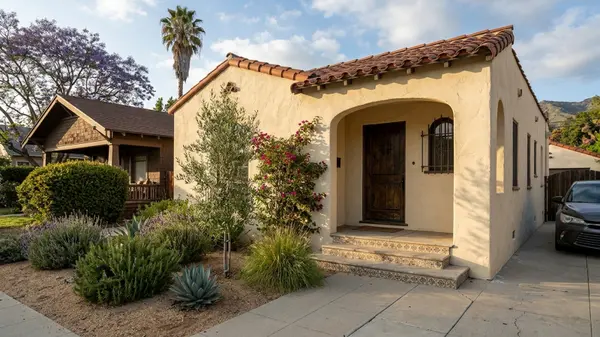
Single-family homes put loans closer to jumbo territory
At the single-family median price of roughly $1,216,515, a 20% down payment leaves about $973,000 to borrow. That fits under the county limit, but with far less room than a condo loan. A house priced above the median can push the balance into jumbo financing, where lenders typically look harder at cash reserves and credit.
A buyer near the line can sometimes drop under it with a larger down payment, which changes the loan products available. Ask your lender what cash reserves they require for a jumbo loan at your target amount.
More than a third of houses sell above list, so an offer over asking can outrun the appraisal. Lenders lend on the appraised value, so any gap comes out of your cash at closing, on top of the reserves the lender expects to see.
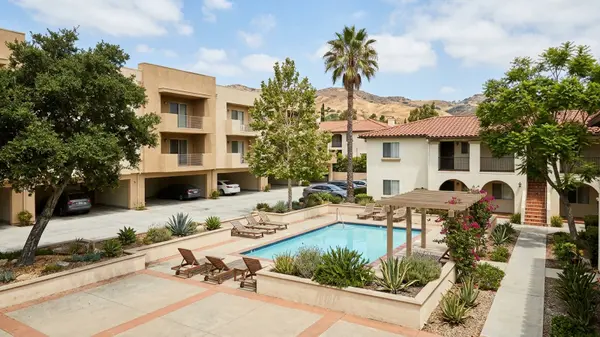
Condos and townhouses usually fit a conforming loan
At the condo median price of $654,933, the same down payment share means borrowing about $524,000, well inside the conforming limit. That gives you access to standard conventional pricing and possibly FHA options, since the county's 2026 FHA limit matches the conforming limit. Townhouses sell at prices close to condos and posted the steepest annual price drop of any LA home type, so a typical townhouse loan also stays conforming.
What you give up is flexibility, because the building has to qualify too. A condo project that lacks FHA approval, or that a conventional lender rejects outright, can knock you out of the loan you planned on. Before you go too far, ask the lender whether the specific condo project is approved for the loan type you intend to use. Ask the HOA for current monthly dues and any pending special assessments, since those dues count against your debt-to-income ratio.
How much a rate change costs at Los Angeles prices
Small rate movements translate into large monthly differences at LA price points. For illustration only, and not reflecting today's rate, here's what a 6% and a 7% rate look like on a 30-year fixed loan, covering principal and interest only.
On the condo-median loan of about $524,000, the lower rate produces a monthly payment of roughly $3,141. The higher rate raises it to about $3,486, a difference of roughly $345 a month. On the house-median loan of roughly $973,000, the payment is about $5,835 at the lower rate and roughly $6,475 at the higher one, a gap of about $640 a month.
A one-point rate move costs a house buyer nearly twice what it costs a condo buyer each month. That's why rate-lowering levers matter more on house-size loans.
How to lower your mortgage rate in Los Angeles
Your credit score plays a direct role in the base rate you're offered. So does the size of your down payment. Beyond those, you can pay cash now to buy the rate down, get the seller to cover that cost, or accept rate risk later with an adjustable-rate mortgage. The right choice depends on your upfront cash, your room to negotiate, and how long you plan to keep the loan.
Paying discount points
Discount points are prepaid interest: you pay an upfront fee for a lower rate, with one point equal to one percent of the loan amount. Points have no fixed value in terms of the rate reduction they buy, so run the break-even math. Divide the upfront cost by your monthly savings to see how many months it takes to come out ahead.
A point on the house-median loan costs nearly twice as much as on the condo-median loan. If you sell or refinance before the break-even month, the points were money spent for nothing. Ask the lender for a Loan Estimate with and without points so you can compare the two side by side.
Asking the seller to pay for a rate buydown
Condos are selling slowly and slightly under asking, sitting for a median 82 days and closing at 98% of list. That gives condo buyers room to ask the seller for a permanent or temporary rate buydown credit. On a slow listing, a seller credit can do more to lower your monthly payment than cutting the price by the same dollar amount. In competitive single-family sales, by contrast, asking for closing costs often weakens an offer.
A temporary buydown lowers only the first year or two of payments, leaving you to qualify at and eventually pay the full note rate. Seller contributions are also capped based on occupancy type and loan-to-value ratio. Before you write the offer, ask the lender for the maximum seller credit allowed for your loan type and down payment.
Choosing a fixed or adjustable rate
An adjustable-rate mortgage trades long-term certainty for a lower starting rate. An ARM holds a fixed rate for an initial period, then adjusts up or down within initial, periodic, and lifetime caps. That structure fits a buyer who expects to sell or refinance before the first adjustment. A traditional 30-year fixed loan is better suited to a long hold.
Payment stability is what you give up. Once the fixed period ends, the payment can rise up to the caps, and refinancing out is never guaranteed. Get the initial, periodic, and lifetime caps in writing before you commit to an ARM.
Where to get today's mortgage rate and how to compare lenders
No official average mortgage rate exists specifically for Los Angeles. The most-cited benchmark is Freddie Mac's weekly national survey. It is released every Thursday and based on loan applications that lenders nationwide submit to Freddie Mac. It shows the national direction, not your rate.
Mortgage rates generally track bond yields such as the 10-year Treasury, which is why quotes change daily. Your actual rate today comes from a same-day lender quote or Loan Estimate.
Reading a Loan Estimate
The Loan Estimate is the document that makes lenders comparable. By law, a lender must send you one within three business days of your application. It shows the interest rate, APR, points, and lender fees in a standardized layout, so you're comparing the same categories no matter which lender produced it.
Request estimates on the same day for the same loan amount. Estimates requested days apart reflect different bond markets, so a lower rate might just be a better market day rather than a better lender.
Banks, credit unions, brokers and direct lenders
Banks may hold jumbo loans on their own books. Credit unions require membership to access their products. Brokers shop your application across several wholesale lenders. Direct lenders underwrite in-house.
Ask whether a lender regularly closes jumbo and condo loans in LA County. A broker's quote can include compensation that a direct lender's quote doesn't present the same way, so compare total costs on the Loan Estimate rather than the headline rate. Look up the loan officer on NMLS Consumer Access before you apply.
When to lock your rate
A rate lock means your interest rate won't change between your lock date and closing, as long as you close within the lock period and your application doesn't change. A change in loan amount, credit score, or verified income can still move the rate. Match the lock length to your escrow timeline: a slow-selling condo deal and a fast-moving single-family purchase often need different lock lengths.
Locking protects you from rising rates but may keep you from getting a lower rate if the market falls after you lock. If escrow runs past the lock date, extending it can be expensive. Before committing, ask how long the lock lasts, what an extension costs, and whether a float-down option is available.
What mortgage rates mean if you're selling in Los Angeles
Buyers financing at today's rates shop by their monthly payment limit, and citywide supply gives them choices. For condo sellers especially, offering a rate buydown credit can widen your buyer pool. A credit that lowers the buyer's interest rate often secures a deal faster than waiting for someone who can absorb the payment at the current market rate without help.
If you're preparing to list and want to talk through how current rates affect your potential buyer pool, that's a conversation worth having before you set the price.
At a glance
- Median sale price, all homes: $1,032,508, down 1.7% year over year (Redfin, 90 days ending 2026-09-30)
- Single-family homes: median sale price $1,216,515, down 0.7% year over year, 3,232 sold (90 days ending 2026-09-30)
- Condos: median sale price $654,933, down 1.5% year over year, 861 sold (90 days ending 2026-09-30)
- Townhouses: median sale price $680,008, down 3.5% year over year, 222 sold (90 days ending 2026-09-30)
- Median days on market: all homes 56, single-family 48, condos 82, townhouses 67 (90 days ending 2026-09-30)
- Sale-to-list ratio: all homes 99.2%, single-family 99.8%, condos 98%, townhouses 99% (90 days ending 2026-09-30)
- Share sold above list price: all homes 30.1%, single-family 35.4%, condos 15.1%, townhouses 24% (90 days ending 2026-09-30)
- Months of supply: all homes 5.4, single-family 4.3, condos 7.7, townhouses 4.8 (90 days ending 2026-09-30)
- Median price per square foot: all homes $623, single-family $683, condos $567, townhouses $454 (90 days ending 2026-09-30)
- Homes for sale (inventory): all homes 8,383, single-family 4,565, condos 2,154, townhouses 344 (90 days ending 2026-09-30)
Los Angeles mortgage rate FAQs
How much is a $100,000 mortgage at 6% for 30 years?
For illustration only, and not reflecting today's rate, a $100,000 loan at that rate costs about $599.55 a month in principal and interest, or roughly $116,000 in total interest over the life of the loan. Each additional loan of that size adds about that much to your monthly payment.
How much is the monthly payment on a $550K home in Los Angeles?
Putting a fifth down on a $550,000 home leaves a $440,000 loan. For illustration only, at the lower rate in the worked example above, that loan costs about $2,638 a month in principal and interest before taxes, insurance, and any HOA dues. A $550,000 budget falls below the median condo price in the area.
What is the monthly payment on a 15-year mortgage for $500,000?
For illustration only, at the lower rate in the worked example above, that loan costs about $4,219 a month in principal and interest over 15 years. Compared with a 30-year term at the same rate, it saves well over $300,000 in total interest. Because 15-year rates are usually quoted lower than 30-year rates, get a real lender quote for exact numbers.
How can I calculate my mortgage payment including taxes and insurance in Los Angeles?
Start with the principal and interest from your Loan Estimate. Then add your annual property tax divided by 12 (including any supplemental bills), your homeowners insurance premium divided by 12 from a direct quote, and any monthly HOA dues and mortgage insurance. The Loan Estimate shows an estimated total monthly payment, and the CFPB provides an interactive explainer to help you double-check the details.
What happens if I pay an extra $200 a month on my 30-year mortgage?
For illustration only, on a $500,000 loan at the lower rate in the worked example above, the normal principal and interest payment is about $2,998. Paying about $3,198 instead retires the loan roughly four and a half years early and saves about six figures in interest. Confirm with your loan servicer that extra payments go directly to principal and that your loan has no prepayment penalty.
Is 2026 a good time to buy a house in Los Angeles?
It depends on your personal timeline and monthly payment comfort. With prices slightly down year over year and homes taking longer to sell, buyers have some room to negotiate; this is general market information, not financial advice.
Can a 70-year-old get a 20-year mortgage in Los Angeles?
Yes. Federal law bars lenders from discriminating based on age as long as the borrower has the capacity to contract, though a lender may favor applicants 62 or older. You still need to meet standard income, credit, and asset requirements, and retirement income, Social Security, and qualifying asset income can all count; ask your lender how they document these sources.
What is the average mortgage rate in Los Angeles?
No official average is published for Los Angeles; the Freddie Mac weekly survey described above is a national benchmark. Local quotes vary mainly by loan size, credit score, down payment, and whether you pay discount points.
Sources
- Redfin: Data Center
- Calculated Risk: FHFA Announces Baseline Conforming Loan Limit
- Lower: FHA Loan Limits in California
- CFPB: Compare Loan Offers
- CFPB: Americans Are Paying Upfront Fees Seeking to Lower Interest Rates
- Fannie Mae: Interested Party Contributions
- CFPB: What Are Rate Caps With an ARM?
- CFPB: What's a Lock-In or a Rate Lock?
- Freddie Mac: Primary Mortgage Market Survey
- US News: Falling Treasury Yields Leave Room for Mortgage Rates to Move Lower
- US Code: Equal Credit Opportunity Act
Categories
Recent Posts