How much house can you afford in Los Angeles, CA? 2026 budget breakdown
In Los Angeles, the property type your budget reaches matters just as much as the price itself.
Key takeaway
Most Los Angeles budgets reach condos and townhouses first. The median condo sold for $654,933 in the 90 days ending September 2026, while single-family homes cost nearly twice that. If your numbers reach a condo, you're shopping where sellers are negotiating. If you need a house, plan for competition and keep headroom above your target price.
Who this guide is for
You're working out a realistic price ceiling before talking to a lender or touring homes in Los Angeles, and deciding whether that ceiling points to a condo, a townhouse or a house.
How much house can you afford in Los Angeles?
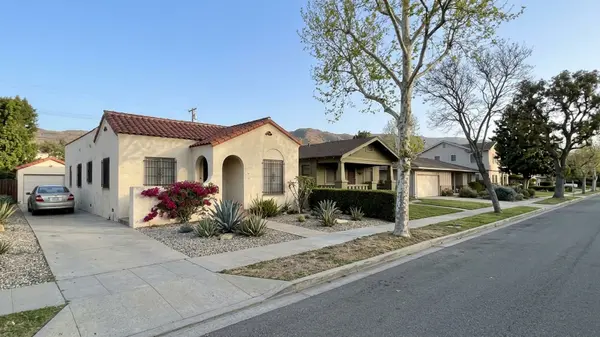
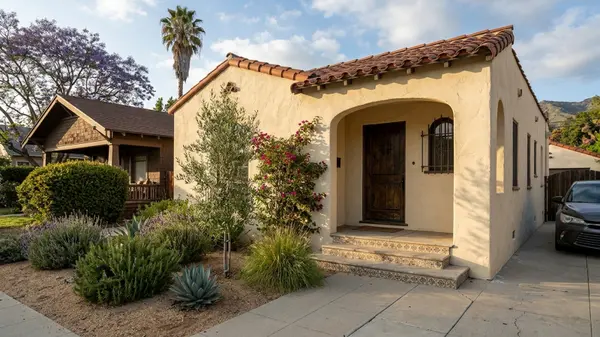
Your income sets a payment ceiling, but in this market that ceiling lands in one of two very different places. A single-family home has a median price of roughly $1,216,515, nearly twice the cost of a typical condo. Reaching that tier takes a substantial leap in borrowing power; the single-family profile below shows what it buys. Lenders set your maximum loan by weighing your housing payment and other debts against your gross monthly income. A first-time homebuyer should establish these baseline numbers before beginning a search.
The 28/36 rule
The 28/36 rule says to spend no more than 28% of your gross monthly income on housing costs (the front-end ratio). It also says to keep total debt payments, including housing, under 36% of gross monthly income (the back-end ratio). Some conventional loans allow more: Fannie Mae allows a debt-to-income ratio of up to 50% for loan casefiles underwritten through Desktop Underwriter.
Qualifying at a higher ratio doesn't mean the payment is comfortable. The rule ignores taxes on your take-home pay and your other living expenses.
What lenders count as debt
Your back-end ratio includes car payments, student loans, minimum credit card payments and child support. HOA dues sit directly inside your housing payment and count against your borrowing power the same way a car payment does. As a result, condo and townhouse buyers qualify for less loan than the sticker price suggests.
Paying off a small debt before applying can raise your ceiling more than a raise would. Ask your lender before moving money, because large transfers require documentation during underwriting.
Conforming loan limits in Los Angeles County
Putting one-fifth down on a median-priced Los Angeles house leaves a loan of roughly $973,212. At 10% down, you're borrowing about $1,094,864. Both amounts fit under the 2026 Los Angeles County conforming loan limit of $1,249,125, and the 2026 FHA limit for a single-family home in the county is the same amount.
Above that limit, the loan becomes a jumbo loan, and lenders often want more cash reserves and stronger credit. A smaller down payment raises the loan amount and can push a house purchase over the limit. Ask your lender which debt-to-income limits apply to your loan program and whether your loan amount is conforming or jumbo.
Questions to narrow your price range
Start by checking whether your maximum payment, after taxes, insurance and any HOA dues, reaches a price near the condo and townhouse medians or the single-family median. Run the sample budget below, then compare your result with the property-type profiles.
If you're weighing detached walls and a private yard against a shared-wall home with more square footage, compare the townhouse and single-family profiles.
To find out whether your loan stays under the 2026 LA County conforming limit or becomes a jumbo loan, see the conforming loan limit section.
To plan the cash for your down payment plus closing costs, use Step 4 of the sample budget and the down payment assistance section.
Los Angeles home prices at a glance
The figures below cover the City of Los Angeles over the 90 days ending 2026-09-30.
- All homes: median sale price $1,032,508, down 1.7% year over year (90 days ending 2026-09-30)
- All homes: 4,729 sales, 8,383 active listings, median 56 days on market, 5.4 months of supply (90 days ending 2026-09-30)
- Single-family: median sale price $1,216,515, down 0.7% year over year; median $683 per sq ft (90 days ending 2026-09-30)
- Single-family: 99.8% sale-to-list, 35.4% sold above list, median 48 days on market, 4.3 months of supply, 4,565 active listings (90 days ending 2026-09-30)
- Condo: median sale price $654,933, down 1.5% year over year; median $567 per sq ft (90 days ending 2026-09-30)
- Condo: 98% sale-to-list, 15.1% sold above list, median 82 days on market, 7.7 months of supply, 2,154 active listings (90 days ending 2026-09-30)
- Townhouse: median sale price $680,008, down 3.5% year over year; median $454 per sq ft (90 days ending 2026-09-30)
- Townhouse: 222 sales, 344 active listings, 99% sale-to-list, 24% sold above list, median 67 days on market, 4.8 months of supply (90 days ending 2026-09-30)
What your budget buys: condo, townhouse, or house
Los Angeles runs distinct markets for condos, townhouses and detached single-family homes. A budget that easily secures a condo might struggle to compete for a detached house in the same neighborhood.
Condos
If you want the lowest entry price and room to negotiate, start with condos. Supply runs at 7.7 months and units close at 98% of list price, roughly $13,100 under asking on a median-priced unit, so offering under asking is realistic. Before offering with an FHA loan, confirm the condo project's approval status on HUD's FHA condominium search.
The catch is that monthly dues reduce your borrowing power. The same slow market that helps you buy will also work against you when you sell.
Townhouses
If you want the most square footage on a budget under about $700,000, townhouses are worth a close look. In LA, a townhouse costs about $113 less per square foot than a condo: $454 versus $567. At those figures, $650,000 buys roughly 1,430 square feet as a townhouse versus about 1,150 square feet as a condo.
The catch is thin inventory, with far fewer townhouses on the market than condos or houses, and most still carry HOA dues.
Single-family homes
If you want a detached house and your approval clears the single-family median with room to spare, this is where you're shopping. It's also the most competitive tier. More than a third of Los Angeles houses sold for over asking in the latest 90 days, and supply is the tightest of any property type at 4.3 months.
Set your search ceiling below your approval so you have room to bid up. The catch: if you win above the appraised value, the lender won't finance the difference. Keep cash available to cover that appraisal gap.
What goes into a monthly payment in Los Angeles
Lenders count property taxes, homeowners insurance and any HOA dues alongside principal and interest. Each one shrinks the loan your maximum payment supports.
Principal and interest
The bulk of your payment goes toward principal and interest. The 30-year fixed-rate mortgage averaged 7.24% as of October 29, 2026, down from 7.32% the prior week. At that rate, the monthly principal and interest on every $100,000 borrowed is roughly $680.
Rates move daily until you lock. Ask your lender how long a rate lock lasts and what an extension costs.
Property taxes
Under Proposition 13, the base property tax rate is 1% of the purchase price plus voter-approved local charges, which pushes the typical rate closer to 1.20%. New owners also receive a supplemental bill based on the home's new assessed value. That bill often isn't in the escrow estimate, so budget for it separately. Ask for the property's current tax bill, including any special assessments.
Homeowners insurance
Estimates vary, but one widely cited 2026 figure puts the average Los Angeles homeowners insurance premium at $2,400 per year. That figure is for a policy with $300,000 in dwelling coverage and a $1,000 deductible. The California FAIR Plan, the state's insurer of last resort, saw a surge in LA-area enrollment after recent fires. Its maximum residential dwelling coverage limit rose to $3 million at the start of 2026, and an average 29.1% dwelling rate increase took effect October 15, 2026.
A property that can only get FAIR Plan coverage may need a second policy to fill the gaps, which raises the payment you planned on. Get a binding homeowners insurance quote before removing contingencies.
HOA dues and mortgage insurance
Dues rise and special assessments happen. Before you commit, ask the HOA for current monthly dues, what they cover and any planned special assessments.
With a smaller down payment, mortgage insurance also applies. For 2026, FHA borrowers making the minimum down payment pay an upfront premium of 1.75% of the base loan amount. They also pay an annual premium of 0.55% for most 30-year loans, which lasts the life of the loan.
Sample budget: a $160,000 household income
Consider a household earning $160,000 a year with a $500 monthly car payment and 20% down.
Step 1: Find your maximum monthly payment
That income breaks down to $13,333 in gross monthly income. Under the front-end limit, the housing cap is $3,733. The back-end limit gives $4,800 for all debt, leaving $4,300 after the $500 car payment. The lower front-end figure is the binding limit for the housing payment.
Step 2: Subtract taxes, insurance and dues
From that cap, subtract property taxes and insurance. On a $600,000 purchase price, taxes at the typical rate cost about $600 a month and insurance at the $2,400 average adds $200 a month. That leaves $2,933 for principal and interest. For a condo, every $100 a month in HOA dues cuts the loan you qualify for by roughly $14,700 at today's rate.
Don't plug in a guessed HOA figure. Use the dues on the actual listing and confirm them with the HOA.
Step 3: Convert the payment into a price
Dividing $2,933 by the $680 per-$100,000 factor yields a maximum loan of about $431,300. Adding the down payment of roughly $107,800 brings the maximum purchase price to around $539,100. That sits below both the condo and townhouse medians in the price list above. This budget reaches entry-level condos and townhouses, not the single-family tier.
Taxes scale with price, so re-run Step 2 whenever your target price changes.
Step 4: Add up the cash you need
Buyer closing costs in Los Angeles County in 2026 typically run about 2% to 5% of the purchase price, on top of the down payment. On an approximate county median home price of $900,000 to $943,000, that comes to an estimated $18,000 to $47,150. Southern California custom has the seller pay for the buyer's owner's title insurance policy, with escrow fees typically split equally. Ask your lender for a Loan Estimate early to see your total cash to close.
How to make a Los Angeles budget go further
If the math doesn't reach the property you want, changing where you look or how you structure your financing can open up options.
Power Real Estate Group can walk through these numbers with you to map out a strategy.
Negotiate where supply is high
Condos sell slowly, and townhouse prices fell faster than any other home type over the past year. In those tiers, offers under asking and seller credits toward closing costs are realistic.
Down payment assistance
State and city homebuyer assistance programs can reduce the cash you need to close. Confirm income limits, price caps and repayment terms with the program administrator before writing an offer around one.
Loan type and down payment size
Fannie Mae's HomeReady program is a conventional mortgage requiring as little as 3% down on a one-unit primary residence. It requires a 620 minimum credit score and household income generally at or below 80% of the area median. Its private mortgage insurance rates are lower than a standard loan's at that minimum down payment, and the insurance can be cancelled once your equity reaches one-fifth of the home's value. FHA borrowers can qualify with a minimum 3.5% down payment if their credit score is 580 or higher.
A smaller down payment trades cash now for mortgage insurance and a larger monthly payment. Ask your lender to compare two down payment scenarios side by side.
Los Angeles home affordability FAQs
How much house can I afford with a $300K salary in Los Angeles?
A $300,000 salary equals $25,000 a month gross, allowing up to $7,000 for housing and $9,000 for all debt under the 28/36 rule. With the sample budget's down payment and tax rate and today's mortgage rate, that supports a price around $1.1 million. That's above the condo and townhouse medians, just below the single-family median and within the conforming limit.
What is the average price of a house in Los Angeles?
The median sale price for all homes in Los Angeles was $1,032,508 over the 90 days ending September 30, 2026. That's a median rather than an average, and it blends condos and houses together.
What is the 3-3-3 rule for buying a house?
The 3-3-3 rule is an informal guideline, not an official regulation. It suggests a price no more than three times your annual income, a minimum down payment, and total monthly housing costs under 30% of gross monthly income. Lenders use debt-to-income ratios such as 28/36 instead.
Can I afford a $1 million house on a $200K salary in Los Angeles?
Not with the sample budget's down payment. That salary yields $16,667 a month and a front-end housing cap of $4,667. The $800,000 loan on that house costs about $5,440 a month in principal and interest alone, before roughly $1,000 in taxes plus insurance. You'd need a much larger down payment, though the price does sit below the single-family median.
Can I afford a $500K house on a $200K salary in Los Angeles?
Yes. With the same down payment, the $400,000 loan costs roughly $2,720 a month in principal and interest, leaving room for taxes and insurance under that $4,667 cap. Because the price sits below the condo median, expect smaller or older condos and townhouses.
What salary do you need to afford a $1.5 million house in Los Angeles?
About $422,500 a year. With one-fifth down, the $1.2 million loan fits just under the conforming limit and costs about $8,160 a month in principal and interest, plus roughly $1,500 for taxes and the insurance premium. Keeping that $9,860 payment at the front-end limit takes that income, so ask your lender about reserve requirements.
What house can I afford with a $65K salary in Los Angeles?
A $65,000 salary is $5,417 a month, which sets a front-end housing cap of $1,517. After taxes, insurance and any HOA dues, that falls well short of the condo and townhouse medians, so homebuyer assistance programs are worth checking.
Sources
- Redfin: Data Center
- Freddie Mac: PMMS
- Calculated Risk: FHFA Announces Baseline Conforming
- Lower: FHA Loan California
- CFPB: What is a debt-to-income ratio
- Fannie Mae: Debt-to-Income Ratios
- California Department of Insurance: FAIR Plan
- Insurify: Homeowners Insurance California Los Angeles
- Calk USA: FHA Mortgage Calculator
- Madison Mortgage Guys: HomeReady Mortgage Guidelines
- JVM Lending: What are the average closing costs in California
- US Code: Title 15 Section 1691
- Yahoo Finance: Buying House Using 3-3-3
- HUD: FHA Condominium Search
Categories
Recent Posts