Finding the Perfect Retirement Communities in Orange County, CA
Let us sit down and talk about why so many people are looking at Orange County for their next chapter in life. It is hard to beat the coastal climate here in Southern California, where we get over 300 days of sunshine a year. That kind of weather means you can actually enjoy the outdoors year-round, whether you are walking along the coast or checking out the local arts scene.
Beyond the beautiful weather, the area is incredibly practical for your long-term needs. Orange County, California, is home to top-tier healthcare systems, including world-class facilities like Hoag Hospital and UCI Medical Center. Having that level of medical care just a short drive away is a huge priority for many buyers.
Ultimately, finding a home here is about securing your peace of mind. In this guide, we are going to explore the local landscape of senior living communities. We will walk through everything from buying homes for sale in 55+ neighborhoods to understanding the costs of local rentals and assisted living care options.
What Types of Retirement Communities in Orange County Offer the Best Fit?
Before we start touring specific neighborhoods, it helps to understand the different types of senior living available in the area. The options generally fall into a few distinct categories depending on the lifestyle you want and the care options you might need.
Here is a quick look at the main categories you will encounter:
-
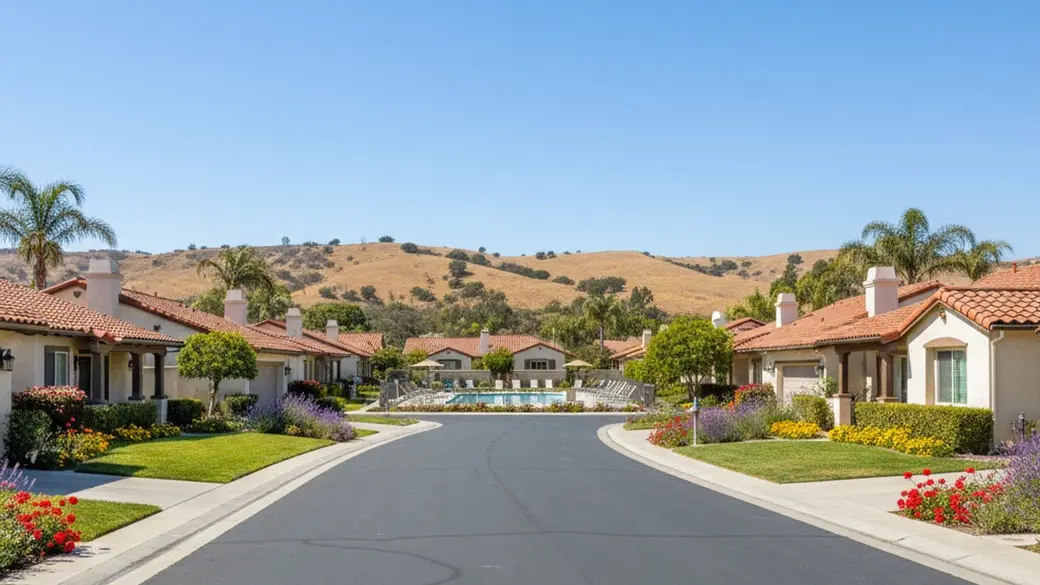
Active 55+ Communities: These are focused entirely on independent living and homeownership. You buy your home, often within a gated community, and gain access to resort-style resident-only amenities like clubhouses, pools, and tennis courts.
-
Senior Apartments: If you are looking to downsize without the commitment of buying real estate, these rental communities offer maintenance-free living. You pay a monthly rent rather than dealing with property taxes and home maintenance.
-
Assisted Living & Memory Care: These facilities are entirely different from traditional real estate. Instead of buying a home, you pay a monthly fee for personal care, assistance with daily living activities, and specialized support for forms of dementia.
-
Life Plan Communities: Often referred to as Continuing Care Retirement Communities, these campuses offer a continuum of care. You can start in independent living and transition to assisted living or skilled nursing on the same campus as your needs change.
It is incredibly important to distinguish between buying real estate in an active adult neighborhood and paying monthly care fees at a facility. Knowing which path makes sense for your current health and finances is the first step in the process.
Top-Rated Active Adult Communities in the Orange County Area
If homeownership in a 55+ neighborhood sounds like the right path for you, we have some fantastic options locally. Let us look at a few of the standout active adult communities where you can find a great lifestyle and beautifully maintained homes.
Laguna Woods Village is by far the largest and most famous option in the area. The community spans over 2,100 acres and is home to more than 18,000 residents. It operates almost like its own private city, offering massive resort-style amenities, multiple private golf courses, equestrian facilities, and a huge variety of floor plans to fit different budgets.
For something a bit newer, Gavilan at Rancho Mission Viejo is a highly sought-after area. This neighborhood features upscale, newer construction with gorgeous, resident-only amenities tucked into the scenic hillsides. It offers a very modern take on the classic retirement village.
There are also several other notable mentions scattered throughout the county. Casta del Sol in Mission Viejo offers beautiful mature trees and access to Lake Mission Viejo, while Huntington Landmark in Huntington Beach provides cool ocean breezes and a fantastic coastal location.
The Average Cost of Senior Housing vs. the Orange County Market
Let us talk numbers, because comparing a 55+ community to the general real estate market can be quite eye-opening. Right now in 2026, the median home price in the broader Orange County market hovers between $1,150,000 and $1,200,000.
Buying into an active adult community often provides a much more accessible entry price for buyers looking to downsize. For instance, condos and co-ops in places like Laguna Woods can offer entry prices ranging from roughly $350,000 to over $600,000. This allows many buyers to sell their larger family homes, purchase a smaller property in cash, and put the remaining equity into their retirement savings.
However, you have to factor in the reality of HOA fees when looking at these more affordable purchase prices. In popular 55+ communities, 2026 HOA fees typically range from $820 to over $910 per month. While that might sound high at first glance, those fees generally cover major expenses like exterior home maintenance, water, trash, landscaping, security, and access to all the community amenities.
Assisted Living and Memory Care Costs in Orange County, CA
From there, it is smart to look at the costs if you or a loved one needs more daily support. Assisted living and memory care are priced differently than buying a home, operating entirely on a monthly fee structure that covers your room, meals, and personal care.
In 2026, average assisted living costs in Orange County range from about $6,000 to $6,500 per month. Location plays a massive role in that price tag. A facility located in coastal Newport Beach, California, will naturally command a higher premium than a comparable facility located further inland in a city like Anaheim.
If you are looking at a luxury retirement community or need a dedicated memory care unit with specialized staff, those premium costs increase. High-end or specialized care facilities can range from $8,000 to $12,000 or more per month. While that is a significant monthly expense, it is often comparable to - or even less expensive than - hiring full-time, round-the-clock in-home care in California.
How Do I Choose the Right Senior Living Community in Orange County?
With all these options and price points, narrowing down the right fit requires a bit of practical planning. You want to match your current lifestyle with what you might need a few years down the road.
Here are a few practical steps to help you evaluate your choices:
-
Assess your mobility and care needs: Be honest about your current physical health and what personal care you might need in the future.
-
Review the floor plans carefully: Look for accessibility features like single-story layouts, walk-in showers, or buildings with reliable elevator access.
-
Evaluate the community financials: Look closely at the HOA reserve funds and specific bylaws. Many 55+ communities require thorough financial vetting and will verify your income and assets before you are approved to purchase.
-
Schedule in-person tours: Spend time walking the grounds to experience the culture, taste the dining options, and see how close you are to local activities and grocery stores.
Taking the time to review the Southern California relocation guide materials and touring these properties in person will give you a much better feel for everyday life in the community.
What is the 80/20 Rule in a Retirement Community?
While touring, you might hear real estate agents mention the 80/20 rule. This is a specific exemption under the federal Fair Housing Act that governs age-restricted housing. To legally operate as a 55+ community, at least 80 percent of the units must be occupied by at least one person who is 55 years of age or older.
This rule is important to keep in mind as you plan your purchase. It directly impacts whether younger spouses or adult children can live in the home with you full-time. It also affects buyers who are thinking about purchasing a property purely as an investment to rent out, as the community will strictly enforce the age requirements of the tenants.
Frequently Asked Questions About Senior Living
Is it cheaper to live in a 55+ community?
Generally, the purchase price of a home in a 55+ community is significantly lower than the broader Orange County average of $1,150,000. However, you must factor in monthly HOA fees, which often run between $820 and $910, to get a true picture of your monthly budget.
Is it better to rent or buy in a 55+ community?
Buying is ideal if you want to build equity and enjoy a resort-style active adult community for the long term. Renting a senior apartment is often better if you want a maintenance-free lifestyle without tying up your capital, or if you anticipate needing to transition into assisted living in the near future.
Does Medicare pay for assisted living in California?
Medicare does not cover the cost of room and board or personal care in an assisted living facility in California. It will only pay for approved medical care, such as doctor visits or short-term skilled nursing stays, so you will need to rely on private funds or long-term care insurance to cover the facility's monthly base fee of $6,000 or more.
Categories
Recent Posts