Year-Round Weather Patterns Across Orange County, CA
Southern California's Mediterranean climate drives a lot of housing demand for those living in Orange County, and it's not hard to see why. Buyers want outdoor living spaces, and when your weather runs mild from January through December, that's not an unreasonable thing to plan around.
With the local median home price sitting around $1.22 million, it's worth understanding what the environment does day to day - because temperatures and seasonal patterns touch everything from utility costs to what you plant in the backyard.
Orange County, CA Weather at a Glance
The region runs on a Mediterranean climate: warm, dry summers and mild, slightly wet winters. That consistency is the whole story. Most residents spend time outdoors year-round without thinking much about it.
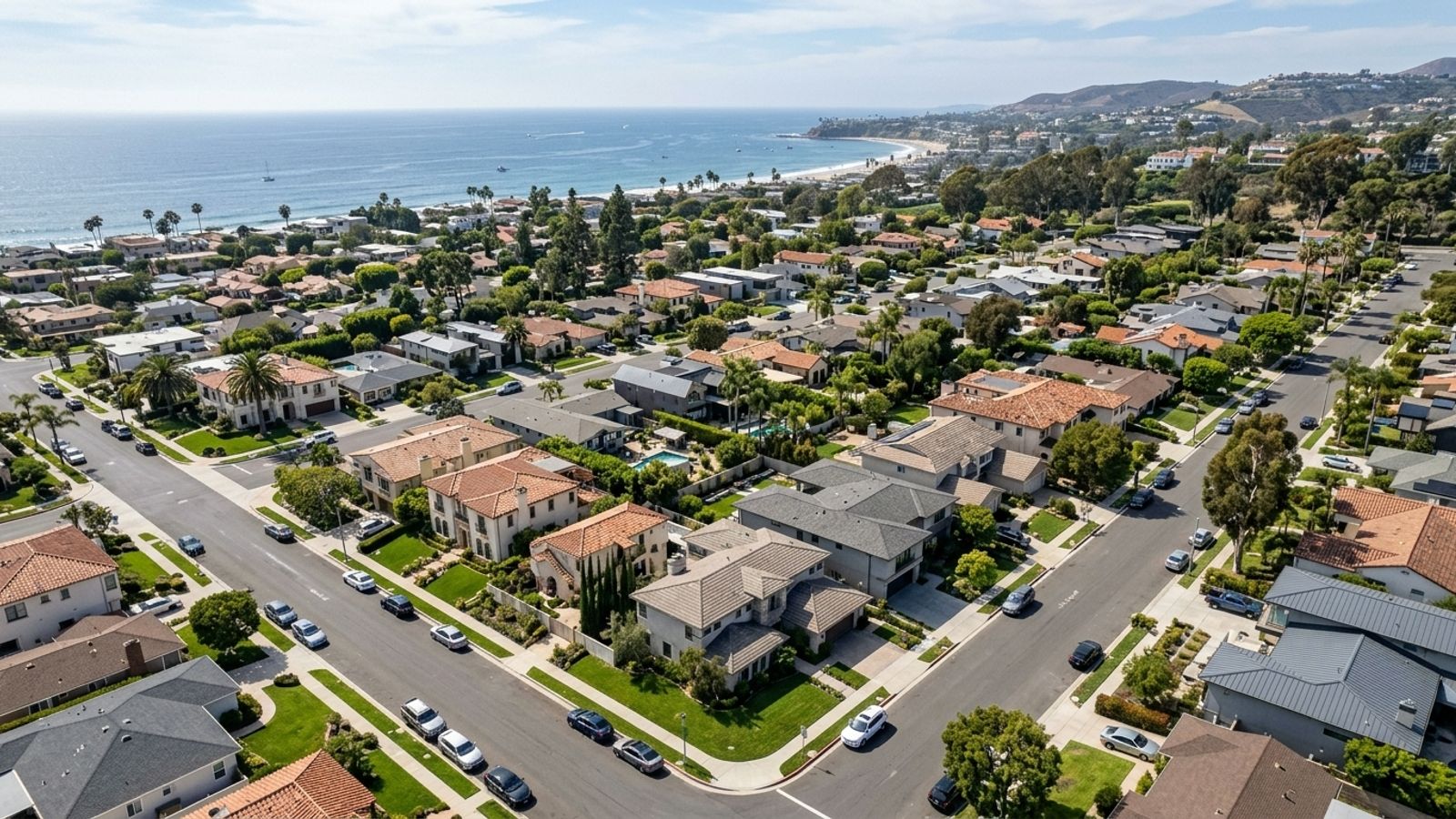
What does shift is how much of that you feel depending on where you are. Coastal and inland areas behave differently. The Pacific Ocean keeps beach towns cooler in summer and warmer in winter than neighborhoods further east - it acts as a natural thermostat, and the further you get from the water, the less it helps you.
Understanding the Local Climate Zones
Under the Köppen climate classification system, Orange County falls under a hot-summer Mediterranean climate - though the exact classification depends on your distance from the water.
Coastal areas are classified as Csb, though some models put them in the BSk category. Head inland, and that shifts to Csa, which reflects the hotter summer temperatures you'll find once you lose the ocean's cooling influence.
Season by Season in Southern California
Average summer highs from June through October sit in the lower 80s, with overnight lows in the lower 60s. The seasons change gradually here. There's no dramatic flip the way you'd see in, say, Chicago or Boston.
Heavy winter gear is rarely necessary. The coldest months still come with plenty of sunshine and decent daytime warmth. What you do get in winter and early spring is more cloudy mornings and occasional rain - but that's about as intense as it gets.
Summer and Fall Conditions
Summer effectively extends into fall, which makes September and October some of the year's warmest months. Inland cities feel it more - the City of Orange averages an August high of 87°F and a low of 65°F.
Along the coast, summer mornings often start under a marine layer, that low blanket of clouds that burns off by afternoon. It keeps mornings cooler and takes some edge off the heat before the afternoon sun does its thing.
Winter and Spring Shifts
Winter days are shorter and cooler, but average highs still sit in the upper 60s to 70°F. Overnight lows settle in the upper 40s to lower 50s - cold enough to need a jacket, not cold enough to scrape ice off a windshield.
In the City of Orange, December averages a high of 69°F and a low of 47°F. Spring is the least predictable stretch of the year, with occasional rain showers before the dry summer pattern locks in for good.
Average Temperatures by Month
August is the hottest month across most of the county. December and January trade off as the coldest, and the gap between them is narrower than most people expect before they move here.
Buyers coming from colder climates tend to find Orange County winters feel more like early fall or late spring back home. No freezing temperatures means year-round gardening and outdoor entertaining aren't just marketing language - they're how people live here.
Hottest and Coldest Extremes
Coastal cities rarely break 90°F. Inland areas hit harder - the City of Orange peaks in August at an average high of 87°F.
January carries the lowest overall averages, with the National Oceanic and Atmospheric Administration (NOAA) reporting normal temperatures around 57.8°F. Even so, December daytime highs routinely approach 70°F before dropping into the upper 40s overnight.
Monthly Temperature Trends
January through May sees a steady climb from the upper 60s into the mid-70s. The marine layer shows up most aggressively in May and June, sometimes holding daytime highs lower than the calendar would suggest until the clouds clear out.
July through October is the reliable heat stretch - highs consistently in the 80s, very little variation week to week. November and December cool off gradually, though Santa Ana winds can push temperatures back up suddenly during late fall before winter settles in for real.
Rain, Snow, and Humidity Levels
Orange County gets roughly 12 to 15 inches of rain per year on average. That's well below the United States average of 38 inches, which is why the landscape looks the way it does and why irrigation isn't optional here.
Most of that rain falls between December and March. The dry season runs from late spring through autumn, and homeowners who don't plan their landscaping around drought-tolerant plants tend to find out the hard way.
Annual Rainfall and Snowfall
NOAA 30-year normals put the county's average rainfall at roughly 12.3 inches annually. When it does rain, it tends to come in short, heavy bursts rather than long gray drizzles - skies usually clear fast.
Snow? Orange County averages zero inches per year, compared to the national average of 28 inches. You don't winterize plumbing here. You don't shovel driveways. That's just not part of the routine.
Daily Humidity
Average humidity runs around 60% to 70%. For most people, that's the sweet spot - comfortable rather than oppressive, especially compared to East Coast or tropical climates.
January is the driest month, with the lowest dew points of the year. Summer humidity stays manageable, though coastal properties will feel a bit more moisture in the air from the nearby ocean.
Severe Weather and Natural Hazards
The region averages about 29 days per year where temperatures exceed 90°F, mostly in late summer and early fall, mostly inland. There are no hurricanes, no blizzards - but the dry climate has its own set of conditions worth understanding before you buy.
Extreme Heat and Storms
Tornadoes and severe thunderstorms are rare in Southern California. Extreme heat is the main weather-related concern - it stresses power grids and puts real demands on home air conditioning systems.
When heat combines with low humidity, wildfire risk goes up across the state. Wildfire risk ratings vary by specific location, so properties near open brush or canyon areas warrant a closer look at local fire safety building codes and landscaping requirements.
Timing Your Visit or Move
Homes in Orange County currently spend roughly 43 days on the market before selling. If you're planning a move, the weather and the real estate cycle are both worth factoring into your timing.
Moving in summer puts you in the middle of peak inventory - and peak heat. It's a trade-off. You'll have more to choose from, but you'll be carrying boxes in temperatures that peak in the 80s.
Best Months for Weather
Spring and late fall are the most comfortable windows for a move. April, May, October, and November give you temperatures in the 70s without the summer heat or winter rain.
If you're visiting to tour neighborhoods, October is hard to beat - lingering summer warmth, fewer crowds, clear skies. And honestly, the weather here is mild enough year-round that there's no real off-season for house hunting if your schedule doesn't allow for perfect timing.
Living in Orange County, CA: Weather and Real Estate
The local market currently has around 6,100 available homes, with a median sale price that's seen a 3.9% year-over-year increase. The climate is a real factor in those numbers.
Buyers here tend to prioritize covered patios, outdoor kitchens, and swimming pools - and the weather genuinely supports that kind of use. The indoor-outdoor lifestyle you hear about in Southern California real estate isn't a sales pitch; it's how the climate works.
Evaluating Properties
When you're touring homes, pay attention to how the property sits relative to the sun and the ocean breeze. West-facing windows take in intense afternoon heat, which means insulation and window treatments matter more than you might expect.
Coastal cities like Huntington Beach or Newport Beach will give you cooler summers and more morning fog. Inland cities like Irvine or Yorba Linda run hotter in summer but see less marine layer - different daily rhythms, and worth thinking through before you decide where you want to land.
Frequently Asked Questions
What is the weather like in Orange County, CA year round?
Orange County runs on a Mediterranean climate - warm, dry summers and mild winters. Average daytime highs range from the upper 60s in winter to the mid-80s in summer.
What are winters like in Orange County, CA?
Mild and slightly wet. Daytime highs typically reach the upper 60s to 70°F, overnight lows drop into the upper 40s and lower 50s, and winter is when most of the region's 12 to 15 inches of annual rainfall arrives.
How does the weather differ between coastal and inland cities in Orange County, CA?
Coastal cities run cooler in summer and warmer in winter, thanks to the ocean's moderating effect - and they often start summer days under a marine layer. Inland cities see hotter summer peaks, like August highs around 87°F in the City of Orange, and slightly cooler winter nights.
Is it humid in Orange County, CA?
Humidity averages around 60% to 70% - moderate, and noticeably more comfortable than tropical or East Coast climates. January is the driest month of the year.
Does it snow in Orange County, CA, and how much?
No. Orange County averages zero inches of snow per year. Winter driving and property maintenance stay straightforward because of it.
Are there tornadoes or severe weather in Orange County, CA?
Tornadoes are extremely rare here. The more common severe weather concern is extreme heat - averaging about 29 days per year above 90°F - along with elevated wildfire risk during dry, windy periods.
When is the best time of year to move to Orange County based on the weather?
Spring and fall are your best options, since you avoid both the August heat and the winter rain showers. October and November are particularly easy - mild temperatures and clear skies most days.
What is the weather difference between Irvine and Newport Beach?
People comparing Irvine and Newport Beach will notice distinct daily weather rhythms. The inland location of Irvine brings hotter summer temperatures with less morning fog. Meanwhile, Newport Beach stays cooler in the summer due to the moderating effect of the Pacific Ocean.
Do coastal cities like Huntington Beach and Newport Beach have similar weather?
Both of these coastal cities share a very similar climate influenced by the Pacific Ocean. Residents of Huntington Beach and Newport Beach can expect cooler summers and warmer winters than areas further east. These beach towns also frequently experience a morning marine layer that burns off by the afternoon.
Categories
Recent Posts