Los Angeles vs Beverly Hills: A Local's Guide to Real Estate and Lifestyle
Grab a coffee and let's talk Southern California real estate. If you are looking at a luxury relocation to this part of the coast, you are probably weighing Los Angeles against Beverly Hills. On a map, they look like the exact same place. In reality, the municipal, financial, and lifestyle differences are massive. Let's break down exactly what you are buying into with each zip code so you can make an informed decision for your next move.
Why is Beverly Hills Not Part of Los Angeles?
To understand the market, we first have to look at the map. It is a common misconception that Beverly Hills is just a fancy neighborhood within LA.
Beverly Hills is actually an entirely independent, incorporated city. Even though it is geographically surrounded by Los Angeles and West Hollywood, it has operated under its own government since 1914. It sits squarely within Los Angeles County, but it is not governed by the City of Los Angeles. When you are studying Los Angeles municipal boundaries, you will quickly spot the clear lines where city services change over.
This independence means Beverly Hills manages its own police department, fire department, and municipal services. For residents, this translates to noticeable differences in daily life. You will see distinct zoning laws, highly manicured street maintenance, and generally faster emergency response times because the city resources are concentrated in a much smaller 5.7-square-mile area. You are paying for a highly localized infrastructure that operates completely separately from the massive Los Angeles bureaucracy.
Real Estate Market: Los Angeles vs Beverly Hills
Moving from city services to housing, the property markets in these two areas cater to entirely different budgets and architectural tastes. Let's look at what your money actually buys in today's market.
The broader Los Angeles real estate market is vast and varied. Depending on the neighborhood, median home prices typically hover between $900,000 and $1,150,000. You can find everything from sleek Downtown LA condos for sale to historic Spanish bungalows in areas like Culver City. It is a massive market with steady investment potential, though inventory constraints can make securing a prime property highly competitive.
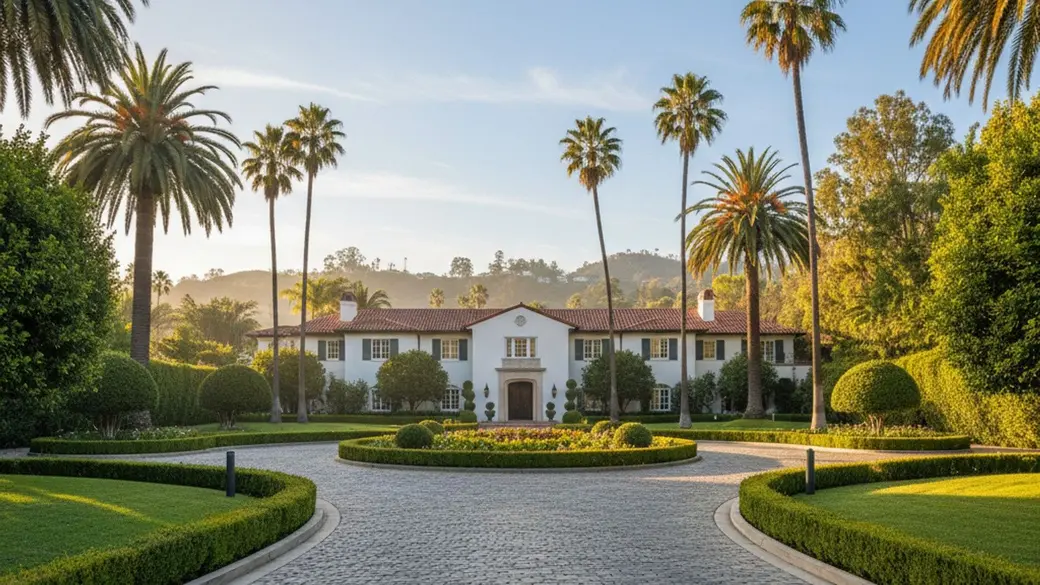
Beverly Hills operates in a completely different financial stratosphere. Here, median home prices sit roughly between $4.4M and over $6M, with ultra-luxury properties regularly shattering the $20M mark. The housing stock leans heavily into legacy properties and sprawling estates. Buyers generally choose between the grand, historic mansions of the Beverly Hills flats or the mid-century architectural masterpieces tucked up in Trousdale Estates. You will also find some highly sought-after apartment buildings in BH, but the single-family mansion remains the primary draw.
Property Taxes and the Measure ULA Advantage
You cannot talk about luxury real estate investment in Southern California without discussing taxes. Under standard California Proposition 13 guidelines, base property tax rates are generally capped, but local assessments can change your bottom line. Beverly Hills currently boasts an effective property tax rate of roughly 1.18%, which is actually slightly lower than the LA County median of 1.24%.
The biggest financial wedge between the two cities right now is Measure ULA. This Los Angeles City policy imposes a steep 4% to 5.5% transfer tax on high-value property sales. Because Beverly Hills is an independent municipality, it is strictly exempt from this tax. For investors and luxury buyers, this exemption has become a massive catalyst, driving ultra-wealthy buyers directly into Beverly Hills to avoid the steep exit fees associated with LA City limits. Understanding Measure ULA is essential before closing on any multi-million-dollar property in the region.
Cost of Living Comparison
Beyond the purchase price and property taxes, your daily expenses will vary depending on which side of the city line you land. The cost of living in Southern California is high across the board, but Beverly Hills carries a distinct lifestyle premium.
In Los Angeles, your utility costs and municipal service fees are managed by massive city entities. Beverly Hills residents pay into their own municipal systems, which can sometimes carry a premium but are widely regarded for their reliability. When it comes to daily amenities, dining, and groceries, Beverly Hills leans heavily into the luxury sector. A standard dinner out or a trip to the local market will generally cost noticeably more in the Golden Triangle than it would in an average Los Angeles neighborhood.
Transportation costs also look a bit different depending on your daily routine. While Los Angeles is heavily reliant on personal cars and rideshare apps to navigate the sprawl, Beverly Hills residents often pay a premium for proximity.
Here is a quick look at how daily costs generally stack up:
-
Housing and Taxes: LA offers a lower barrier to entry but higher luxury transfer taxes, while Beverly Hills requires a massive upfront investment with a protective tax shelter on the back end.
-
Dining and Entertainment: LA provides a mix of affordable neighborhood spots and high-end dining. Beverly Hills is almost exclusively premium, high-end dining and private clubs.
-
Transportation: Both require a car for broader Southern California travel, but Beverly Hills offers a highly concentrated, walkable luxury commercial district right near Rodeo Drive.
Beverly Hills vs. Hollywood vs. Bel Air
If you are narrowing down the luxury market, you are likely comparing Beverly Hills to its most famous high-end neighbors. Each area offers a completely distinct daily experience.
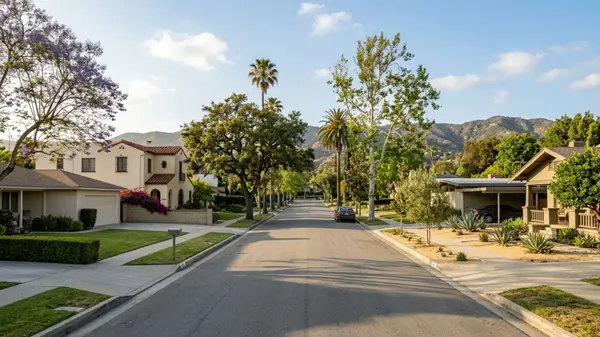
If you want a walkable, flat neighborhood, the Beverly Hills flats are incredibly popular. You can stroll down palm-lined streets directly to local cafes and boutiques. Contrast this with Bel Air, which is primarily residential and famous for its winding, secluded roads. Bel Air offers massive lot sizes and deep privacy, but you will need to drive down the hill for a cup of coffee.
Then you have Hollywood and West Hollywood. These areas offer higher-density housing, a massive commercial buzz, and active nightlife. Hollywood Hills property trends show buyers who want sweeping views and easy access to the energy of the Sunset Strip. Beverly Hills, by contrast, operates at a much slower, more upscale pace.
Together, Beverly Hills, Bel Air, and Holmby Hills make up the Platinum Triangle. If your goal is the absolute peak of exclusivity in Southern California, this trio of neighborhoods is where you will focus your search.
Lifestyle Factors: Schools, Walkability, and Amenities
Real estate is about more than just the house - it is about the infrastructure and community you plug into. The daily lifestyle in these two cities feels fundamentally different, especially when you look at how the neighborhoods are laid out.
For buyers looking closely at education infrastructure, the school districts are a major dividing line. The Beverly Hills Unified School District is a small, highly concentrated network serving approximately 3,500 students with highly rated, well-funded facilities. In contrast, the Los Angeles Unified School District is one of the largest in the country, serving over 500,000 students across a vast geographic area. Proximity to campuses like UCLA also adds a unique academic and cultural layer to the surrounding West LA and Beverly Hills borders.
Walkability is another major factor to consider. Los Angeles is famously spread out and car-dependent. Unless you are in specific pockets like Downtown LA or Culver City, you are driving to get your errands done. Beverly Hills, particularly south of Santa Monica Boulevard, is one of the most walkable luxury enclaves in the state.
Finally, both cities offer incredible access to cultural amenities. Los Angeles holds world-renowned museums, massive sports arenas, and sprawling urban green spaces. Beverly Hills offers a more curated experience, with pristine local parks, high-end galleries, and quiet, manicured green spaces that provide a buffer from the surrounding city traffic.
Frequently Asked Questions
Let's wrap up with a few common questions buyers ask when comparing these two iconic areas.
What is the difference between Beverly Hills and LA?
Beverly Hills is a completely independent city with its own local government, police force, and municipal services. Los Angeles is a massive, sprawling metropolis that completely surrounds Beverly Hills geographically. While both are located within Los Angeles County, they operate under entirely different city laws and budgets.
Is Beverly Hills considered part of Los Angeles?
No, Beverly Hills is not a neighborhood within the City of Los Angeles. It was incorporated as an independent city in 1914 and maintains its own municipal boundaries. However, it is located within the broader borders of Los Angeles County.
What is the richest area in Hollywood or Los Angeles?
The peak of luxury real estate in this region is known as the Platinum Triangle, which includes Beverly Hills, Bel Air, and Holmby Hills. Within Beverly Hills itself, the Trousdale Estates neighborhood is famous for ultra-exclusive, multi-million-dollar properties.
Are property taxes higher in Beverly Hills or Los Angeles?
Base property taxes are similar due to state laws, with Beverly Hills sitting at an effective rate of roughly 1.18%. However, Los Angeles imposes a massive Measure ULA transfer tax of 4% to 5.5% on luxury sales. Because Beverly Hills is an independent city, it is exempt from this tax, making it highly attractive to high-net-worth investors.
Categories
Recent Posts