Navigating the Urban Core: A 2026 Downtown Los Angeles CA Area Guide
Downtown Los Angeles stands as a premier residential and commercial hub in Southern California. The area has been thoroughly transformed from a traditional financial center into a dense, 24-hour urban neighborhood. Buyers evaluating a downtown Los Angeles, CA area guide frequently prioritize walkability, cultural access, and proximity to major employment centers.
The 2026 real estate landscape here offers an entirely different lifestyle compared to the sprawling suburban layouts found elsewhere in the region. Bounded by major transit corridors and the L.A. River, the downtown footprint packs an incredible density of architecture, dining, and art into a relatively compact grid. This concentration of amenities draws individuals seeking a highly connected, car-optional lifestyle in the center of the city.
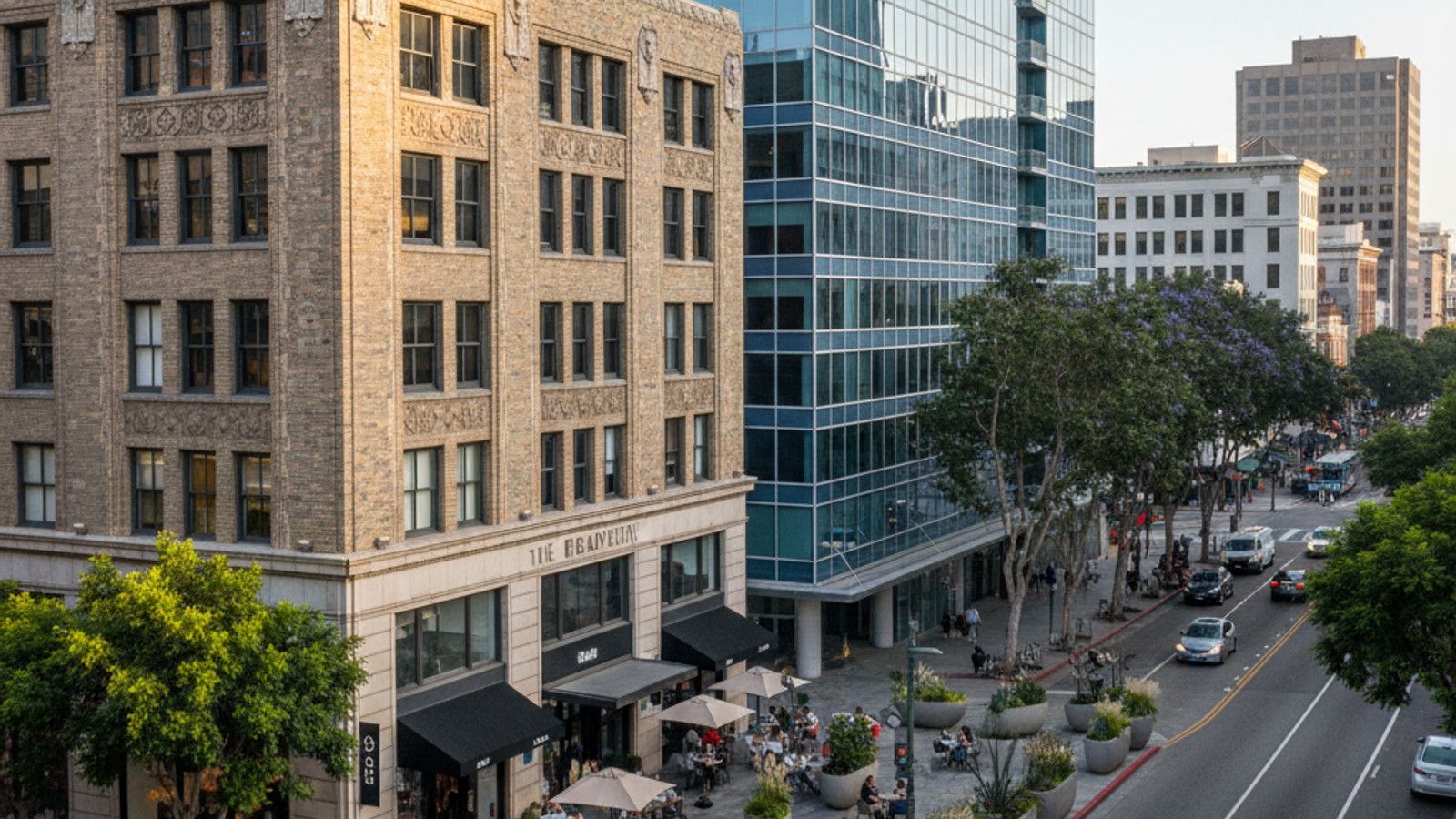
The district blends rich history with modern innovation, positioning century-old movie palaces alongside cutting-edge glass towers. Understanding the nuances of this specific market is essential for anyone looking to purchase property in the heart of DTLA. The city of Los Angeles continues to invest heavily in the infrastructure of the downtown area, ensuring its long-term viability as a residential destination.
Welcome to the Downtown Los Angeles Real Estate Market
The 2026 residential landscape in Downtown Los Angeles is defined by its high-density, mixed-use environment. Developers have successfully integrated living spaces with street-level retail, bringing essential services like grocery stores and pharmacies directly to the base of residential towers. This creates a highly walkable environment where daily errands rarely require a vehicle.
Buyers evaluate this specific market for the sheer convenience of authentic urban living. The ability to take an elevator down to a coffeehouse or walk two blocks to a highly rated restaurant fundamentally changes the daily routine. A typical day in downtown Los Angeles might involve walking to a local bakery, commuting via light rail, and visiting a contemporary art museum before dinner.
Investing in this area requires an understanding of micro-neighborhoods, as the street-level experience shifts dramatically from the Financial District to the Arts District. Boundaries can be distinct, with vibrant commercial zones situated relatively close to areas like Skid Row, making block-by-block knowledge crucial. A clear professional takeaway is that buyers should tour properties at different times of day to truly gauge the pace and noise levels of a specific street.
The market here rewards buyers who prioritize architectural character and proximity to transit over traditional square footage. Properties in this sector consistently hold their value because they offer a vibrant lifestyle that simply cannot be replicated in the surrounding suburbs. Access to world-class galleries and museums right outside the front door remains a primary selling point for the area.
Downtown Los Angeles Property Types and Architecture
Historic adaptive-reuse lofts are highly prevalent, particularly within the Historic Core and the Arts District. These residential units frequently feature industrial elements like exposed brick walls, original concrete pillars, and massive factory-style windows. Many of these historic buildings originally served as banks, complete with massive bank vault installations, or manufacturing warehouses before being converted into residential spaces.
Buyers interested in these older loft conversions often benefit from the Mills Act, a program historically associated with significant property tax reductions on qualifying adaptive-reuse units. The architectural details in these historic buildings often include art deco flourishes, intricate tile work, and original hardwood flooring. Preserving these elements has been a major focus for the Los Angeles Conservancy, ensuring the neighborhood retains its rich history.
Iconic structures like the Bradbury Building, famous for its appearance in Blade Runner, highlight the incredible art deco building styles found throughout the district. Conversely, the South Park and Bunker Hill neighborhoods offer modern high-rise condominiums with extensive luxury amenities. These glass towers provide sweeping views of downtown and frequently include resort-style features like rooftop pools and private fitness centers.
The integration of mixed-use developments continues to shape the architectural landscape across the district. Modern buildings seamlessly combine residential units with commercial spaces, ensuring that residents have immediate access to a shopping area without needing a vehicle. This blend of old and new architecture provides buyers with an exceptionally diverse range of property styles to consider.
2026 Real Estate Market Trends and Average Prices
The current inventory landscape in Downtown Los Angeles shows steady buyer demand for well-maintained units with dedicated parking. Median prices for standard condominiums and lofts generally range from $550,000 to $750,000 in the current 2026 market. Across different building types, the average price per square foot currently hovers around $660.
Buyers should interpret these figures as a baseline, knowing that premium views of the city, corner units, or historic designations will push asking prices significantly higher. Units priced at the lower end of the median range typically include studio or one-bedroom layouts in older buildings. Properties approaching or exceeding the $750,000 mark generally offer larger floor plans, upgraded finishes, and prime locations in highly sought-after high-rises.
A critical takeaway for buyers is that units with deeded, subterranean parking command a distinct premium in this market. Properties lacking on-site parking often sit on the market longer, reflecting the ongoing value of secure vehicle storage in a dense urban grid. Well-priced units in desirable micro-neighborhoods frequently receive multiple offers within the first few weeks of listing.
Working with an agent who understands the specific nuances of downtown property valuation is crucial for structuring a successful offer. Understanding the hyper-local pricing dynamics between a loft in the Arts District and a high-rise in South Park is essential for making an informed investment.
Understanding HOA Fees in DTLA Residential Buildings
Factoring Homeowners Association dues into a total monthly housing budget is a mandatory step when purchasing in this area. Baseline monthly HOA fees for standard condominium units currently average between $350 and $750. These baseline fees typically cover exterior building maintenance, water and trash removal, and basic common area upkeep.
For historic buildings, a portion of these dues often goes toward specialized insurance policies and the preservation of century-old facades. California earthquake insurance is another factor that can influence the overall cost of association dues. Buildings that maintain comprehensive earthquake coverage often pass those premium costs on to residents through their monthly assessments.
Luxury high-rises offering full-service amenities carry significantly higher monthly obligations. Buildings equipped with 24-hour concierge services, valet parking, and expansive rooftop decks frequently see fees exceeding $1,000 per month. Buyers must carefully review the HOA documents during the escrow period to verify exact inclusions.
Understanding the financial health of the association and the presence of any upcoming special assessments is just as important as the purchase price. A well-managed HOA protects property values over time, making it a critical component of the due diligence process.
Public Transportation Infrastructure and Commute Times
Downtown Los Angeles serves as the undisputed central hub for the Los Angeles Metro system. The local transit infrastructure provides extensive, reliable access to the Metro A, B, D, and E lines. Union Station anchors the northern edge of the district, serving as a primary transfer point for both local and regional rail services.
The recent expansion of the Regional Connector has further streamlined travel, eliminating the need for multiple transfers when crossing the city. Commuting from the downtown area to other major commercial centers is highly efficient via light rail and subway. The Metro E Line reaches the coastal hub of Santa Monica in approximately 50 minutes.
Travelers heading to Pasadena can expect a 25-minute trip on the Metro A Line, while the B Line connects directly to the Hollywood Walk of Fame in about 20 minutes. Transit density significantly stabilizes property values in the immediate vicinity of any metro station, as buyers consistently pay a premium for car-free mobility. Beyond the heavy rail lines, the area is highly walkable and well-served by dedicated bus lanes.
Residents frequently utilize a standard Tap card to seamlessly transfer between different modes of public transportation throughout the day. The district is also home to Angels Flight, famously known as the shortest railway in the world. This historic funicular railway provides a quick, practical connection between the Historic Core and the elevated Bunker Hill neighborhood.
Amenities, Museums, and Parks in Downtown Los Angeles
The downtown footprint is anchored by major entertainment venues that draw visitors from across Southern California. Crypto.com Arena and the surrounding L.A. Live complex serve as the primary destination for professional sports and large-scale concerts. Residents also have immediate access to historic culinary and retail hubs scattered throughout the district.
Grand Central Market offers a massive food hall experience, while the Arts District provides a dense concentration of breweries and some of the best restaurants in the city. The area boasts a remarkable concentration of high-profile cultural and architectural landmarks along Grand Avenue. Institutions such as the Walt Disney Concert Hall, The Broad, and the Museum of Contemporary Art (MOCA) define the local arts and architecture scene.
Literary enthusiasts frequently visit The Last Bookstore, an iconic new and used book retailer housed in an old bank building. This massive book and record store has become a major local attraction in its own right. Nearby, the historic Olvera Street and the surrounding LA Plaza area offer a deep dive into the city's early history and vibrant Day of the Dead celebrations.
Exploring the distinct cultural enclaves of Little Tokyo and Chinatown provides residents with unparalleled dining and shopping options. These historic neighborhoods offer everything from authentic street food to contemporary art galleries within a few city blocks. Urban green spaces provide vital outdoor access amid the high-rise architecture. Key parks integrated into the downtown grid include:
-
Grand Park is a sprawling civic space stretching from the Music Center down to City Hall.
-
Los Angeles State Historic Park, offering expansive green acreage and city views near Chinatown.
-
Pershing Square, a centrally located public gathering space in the heart of the historic district.
Having these cultural and recreational amenities within a short walk is a primary driver of residential demand. Properties located within two blocks of these major landmarks rarely sit on the market for long, cementing the value of location within the urban core.
Nearby Educational Institutions
The Los Angeles Unified School District (LAUSD) manages the public educational facilities serving the downtown area. The district operates several specialized campuses designed to integrate seamlessly with the surrounding urban environment. Prominent public schools located in or directly adjacent to the district include Downtown Magnets High School and the Ramon C. Cortines School of Visual and Performing Arts.
Both campuses draw students from across the city due to their highly specialized academic and artistic curricula. These campuses often feature vertical, multi-story designs rather than the sprawling layouts typical of suburban schools. Students and staff frequently utilize the robust local transit network to commute to and from these central locations.
Proximity to these educational campuses influences residential density in specific micro-neighborhoods. Buyers evaluating properties near these institutions often find a highly localized market with robust long-term value retention. Additionally, residents benefit from proximity to the LA Library central branch, providing extensive educational and historical resources.
Downtown Los Angeles Area Guide FAQs
What are the different districts within Downtown Los Angeles?
The area is divided into several distinct micro-neighborhoods, including the Arts District, Historic Core, Little Tokyo, and South Park. Each district features specific architectural styles, from the adaptive-reuse lofts of the Historic Core to the modern glass high-rises in South Park. Understanding these micro-neighborhoods is essential for finding the right property fit.
How do you get around Downtown Los Angeles using public transportation?
Residents primarily use the Los Angeles Metro system, accessing the A, B, D, and E lines via centralized hubs like Union Station. The area is highly walkable, and a standard Tap card provides seamless transfers between light rail lines and local bus routes. The extensive public transportation network makes it entirely possible to live here without a personal vehicle.
What cultural and entertainment options are available in Downtown Los Angeles?
The district offers extensive cultural venues, including the Walt Disney Concert Hall, The Broad, and numerous contemporary art galleries. Entertainment and dining are anchored by major hubs like L.A. Live and the historic Grand Central Market. Residents enjoy immediate access to a dense concentration of museums, theaters, and highly rated culinary destinations.
Categories
Recent Posts