Buying a Home in 2026: Los Angeles, CA vs Orange County
The median home price in Los Angeles, CA recently hit around $1,055,000. Orange County, right next door, sits even higher at roughly $1,195,000. If you're weighing the pros and cons of living in Los Angeles against other Southern California options, those two numbers are usually where the conversation starts.
From there, it comes down to commute logistics along Interstate 5 or Interstate 405, what kind of property you want to live in, and how much month-to-month cost you can absorb beyond the purchase price. Both counties give you the Pacific Ocean and major employment hubs. What they don't give you is the same market.
The Southern California Market Divide
Los Angeles County and Orange County share a border, but step across it and the real estate environment shifts noticeably. Los Angeles, CA is enormous - dense urban cores sitting alongside established residential neighborhoods spread across a geography that takes a long time to drive end to end.
Orange County is directly to the south and leans toward master-planned development. The differences in housing inventory and typical commute times end up driving a lot of final decisions about where buyers put their offers.
Home Prices and Real Estate Trends
The numbers in Los Angeles, CA right now: a median sale price of roughly $1,055,302, an average of 52 days on market, and sellers collecting about 99.5% of list price. The area is sitting at a 5.1-month supply of inventory.
Orange County's entry point is higher. Median home values there are running around $1,195,000 as of mid-2026.
Los Angeles, CA Property Styles
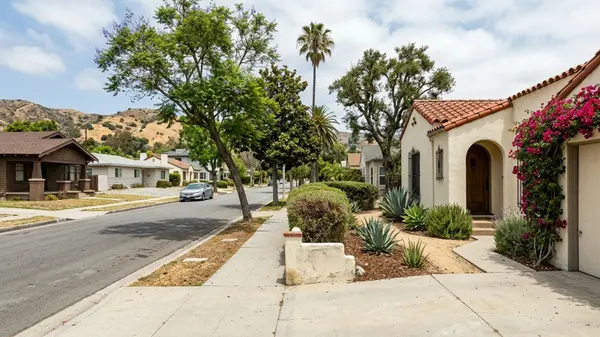
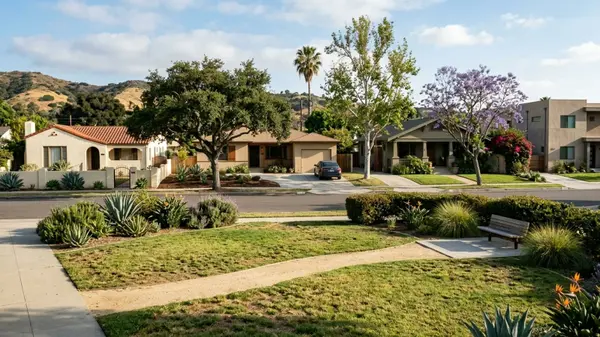
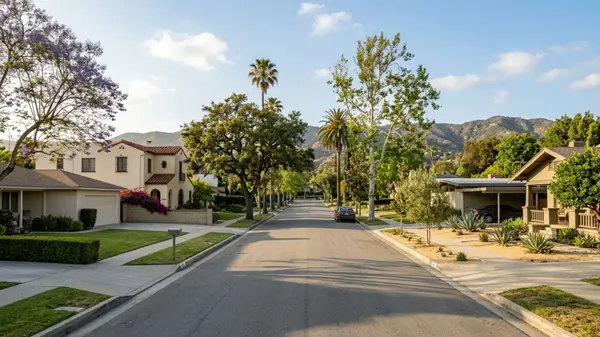
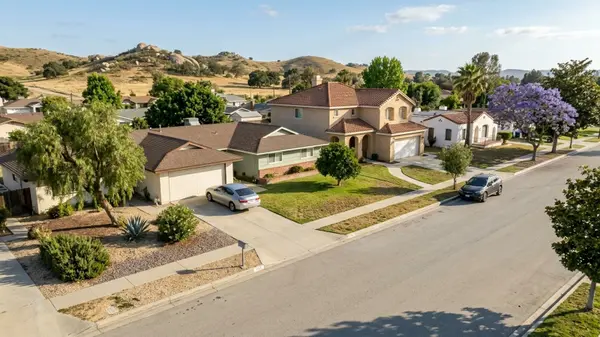
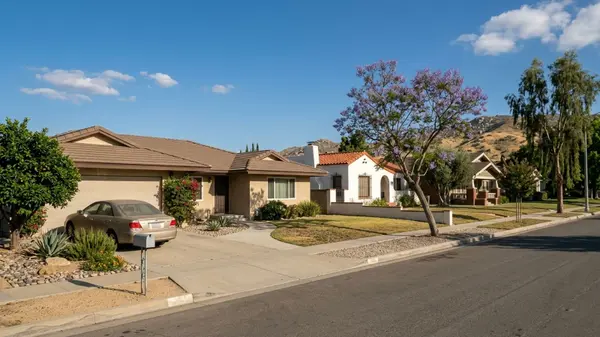
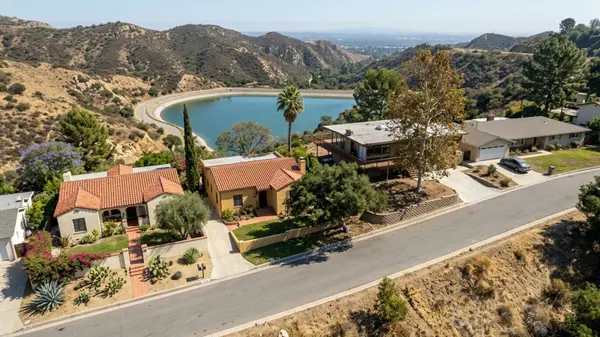
In Los Angeles, CA, you're looking at a wide range - historic single-family homes, high-rise condos, and a lot of architectural variation that's accumulated over the past century. Lot sizes often run smaller than what you'd find in newer suburban tracts, partly because the urban layout was never designed around the car the way later developments were.
If a home has history, it has maintenance costs to match. Factor that into your budget before you fall in love with a craftsman bungalow.
Orange County Property Styles
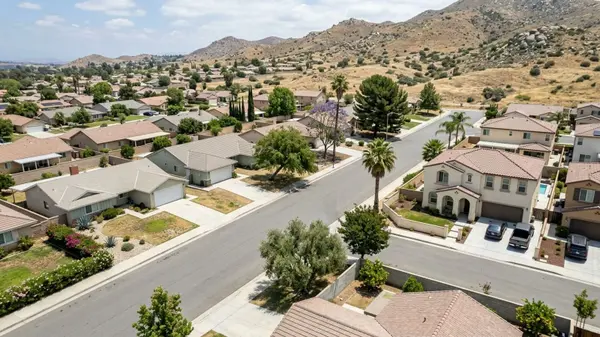
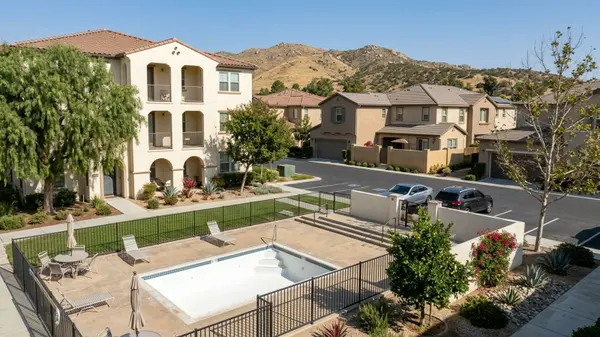
Orange County is master-planned community territory. Uniform street layouts, centralized amenities, integrated municipal recreation facilities - these neighborhoods were designed as complete packages.
HOA fees come with the territory in most of those developments. They cover common areas and exterior upkeep, which shifts some maintenance responsibility off you, but they do add to your monthly number. If newer construction is a priority, you'll find considerably more of it south of the county line.
Everyday Costs and Property Taxes
Los Angeles County carries an effective property tax rate of approximately 0.69%. On a home purchased at the median price of $1,055,000, that works out to roughly $7,279 per year.
Orange County's effective rate is slightly lower at around 0.66% - but the higher median price of $1,195,000 means a typical buyer there ends up paying approximately $7,887 annually. The lower rate doesn't save you money when the base is bigger.
Utilities and Maintenance Expenses
Both counties come with the usual homeownership costs: utilities, transportation, and general upkeep. The practical difference is that older Los Angeles, CA properties tend to need more frequent maintenance than newer Orange County builds.
On the other side, HOA dues in Orange County's planned communities add a recurring monthly expense. They replace some direct maintenance costs, but not always dollar for dollar.
Commute Times and Transit Options
The average one-way commute in Los Angeles County runs about 28.2 minutes. Interstate 5 and Interstate 405 are the main corridors to downtown employment centers and Los Angeles International Airport (LAX).
Orange County averages 23.1 minutes one-way. Residents use those same interstates, plus John Wayne Airport (SNA) for regional flights.
Cross-County Commuting
If you're planning to live in one county and work in the other, do yourself a favor and test the drive before you commit to a neighborhood. A typical trip from Downtown LA to Irvine or other Orange County hubs takes 40 to 60 minutes under normal conditions.
During peak rush hour, that same drive can stretch past 90 minutes. The route exists on paper; what it costs you every day is a different question.
Public Transit Alternatives
The Metrolink rail system connects Los Angeles, CA and Orange County and is worth looking at if highway traffic is a dealbreaker for you. Both counties also run extensive local bus networks.
That said, suburban neighborhoods throughout both regions are largely car-dependent. Public transit covers the major employment hubs reasonably well; it covers the residential side considerably less so.
Local Amenities and Recreation
Both counties give you direct access to the Pacific Ocean coastline and miles of public beach. Parks and municipal recreation facilities are spread throughout each.
Los Angeles, CA has the higher concentration of major entertainment venues and professional sports facilities, along with shopping districts and cultural institutions that pull visitors from across Southern California. Orange County has its own large-scale shopping centers and entertainment options - they're just distributed differently, spread out among the master-planned communities rather than clustered in urban cores. Either way, outdoor recreation isn't something you'll be short on.
Deciding Where to Buy
Your budget and your housing priorities need to be in the same conversation. Los Angeles, CA offers a lower median price and more available inventory. Orange County costs more to get into but gives you access to newer construction and organized community layouts.
Where you work should probably set the outer boundary of your search radius. Everything else fits inside that.
Frequently Asked Questions
Is it more expensive to buy a house in Los Angeles, CA or Orange County?
Yes, Orange County is more expensive. The median home price there is approximately $1,195,000, compared to roughly $1,055,000 in Los Angeles, CA.
What are the main differences in property types between Los Angeles, CA and Orange County?
Los Angeles, CA has a mix of historic single-family homes and high-rise condos. Orange County is known for master-planned communities and newer tract homes.
How do property taxes compare between Los Angeles, CA and Orange County?
Orange County's effective property tax rate is lower at 0.66%, versus 0.69% in Los Angeles County. Because Orange County home prices are generally higher, though, the total annual tax bill usually comes out larger.
How does the daily commute and access to public transit compare for homeowners living in Los Angeles, CA versus Orange County?
Los Angeles County averages a 28.2-minute one-way commute; Orange County averages 23.1 minutes. Both areas rely on Interstate 5, Interstate 405, and the Metrolink rail system for regional transit.
Which region generally offers better school districts and family-friendly amenities when comparing Los Angeles, CA to Orange County?
It depends on what you're looking for. Both regions have municipal recreation facilities, parks, and public beaches along the Pacific Ocean. Los Angeles, CA puts you closer to major sports venues; Orange County builds its amenities directly into the master-planned communities.
What is the most common mistake homebuyers make when deciding whether to relocate to Los Angeles, CA or Orange County?
Underestimating cross-county commute times. The drive from Downtown LA to Orange County hubs runs 40 to 60 minutes in normal traffic - and over 90 minutes during peak rush hour. Most people don't account for that until they're already living it.
Are there specific housing options for older adults in the region?
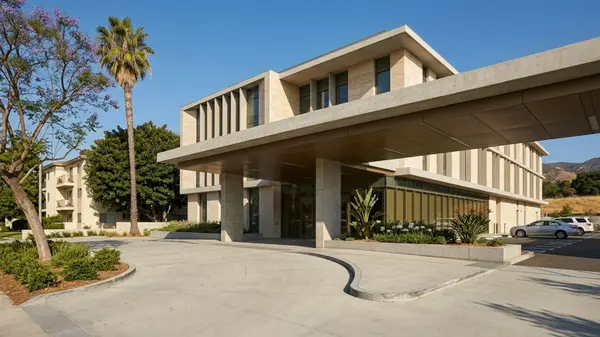
While Orange County is focused on master-planned developments, buyers can also find dedicated retirement communities in Los Angeles. These specialized neighborhoods offer a different lifestyle compared to the historic single-family homes and high-rise condos found throughout the rest of the city.
Should buyers consider other municipalities within Los Angeles County?
Expanding your search beyond the main city limits can provide different property styles and commute logistics. Evaluating Los Angeles vs Inglewood is a common approach for buyers who want to remain close to major employment centers and the airport.
Categories
Recent Posts