Los Angeles vs Santa Monica: A Local's Guide to Choosing Where to Live
Southern California living is a dream for many, but picking the exact right spot takes a bit of local real estate know-how. Whether you are a first-time buyer, a renter looking for your next apartment, or an investor analyzing cap rates, you have a major decision ahead of you. If you are exploring places to live in Los Angeles, you will quickly notice that the vibe, the pricing, and the daily routine change drastically from one zip code to the next.
While they share a beautiful coastline and a border, choosing to live in Los Angeles versus moving to the coast offers two very different real estate markets. Buyers often start their search thinking these areas are interchangeable, only to find out that the financial and practical realities are miles apart.
In this guide, we will break down the latest numbers on housing costs and review the most recent crime statistics. We will also compare the daily commute and overall lifestyle, so you can make the absolute best choice for your next move.
Is Santa Monica a Separate City From Los Angeles?
Let's start by clearing up a very common point of confusion about the local map and city borders. Many buyers assume the coastal areas are just neighborhoods of the larger city, but Santa Monica is actually an independent, incorporated city located entirely within Los Angeles County.
It is not simply a district like West LA, Culver City, Marina del Rey, or Venice Beach. Because it is its own municipality, Santa Monica operates with complete autonomy from Los Angeles. The city has its own local government, its own city council, and its own dedicated school district.
For homeowners and real estate investors, this means dealing with a completely different set of zoning laws, building permits, and rent control regulations. You are not dealing with the massive Los Angeles bureaucracy, but rather a smaller, more localized city hall.
This independence also extends to public safety and everyday city services. Residents interact with the Santa Monica Police Department rather than the LAPD, and everything from street sweeping to trash collection is managed locally.
Cost of Living and Real Estate Prices: 2026 Comparison
From there, it is smart to look at the numbers, as housing budgets often make the decision for you. The real estate markets in these two areas operate at very different price points as we move through 2026.
In the broader city of Los Angeles, median home prices currently sit around $900,000 to $942,000. This massive market offers a wider variety of lot sizes, architectural styles, and neighborhood price points, making it easier to find an entry-level property.
Meanwhile, Santa Monica commands a massive coastal premium, with median home prices ranging from $1,800,000 to $1,940,000. When you look at homes for sale in Santa Monica, you will notice a significantly higher price per square foot and much smaller lot availability compared to inland properties.
Renting follows a similar pattern, with Los Angeles apartments averaging between $2,100 and $2,600 per month. In Santa Monica, average rents jump to between $2,700 and $4,100, depending heavily on how close the unit is to the water.
Overall, the cost of living in Santa Monica runs about 54% higher than in Los Angeles. While everyday expenses like groceries and utilities are comparable, this premium is driven almost entirely by the intense demand for coastal housing.
Crime Statistics and Area Security
After reviewing the budget, most buyers want to review crime statistics and area security data before making a commitment. It is important to look at objective numbers, as both cities have distinct profiles when it comes to local law enforcement data.
In Los Angeles, violent crime rates vary heavily depending on the specific neighborhood. Because the city covers over 500 square miles, some areas report numbers above the national average, while other residential pockets fall well below it.
Santa Monica presents a very different statistical picture, largely influenced by its massive daily influx of visitors. The city experiences notably high property crime and larceny rates compared to quieter inland suburbs.
This elevated property crime is particularly true in heavily trafficked commercial and tourist zones like the Third Street Promenade and the areas directly surrounding the pier. Both the LAPD and SMPD provide detailed, publicly available crime mapping tools.
Whether you are looking at a quiet street in the hills or a bustling condo near the beach, we always recommend reviewing the latest property crime rates. Checking localized law enforcement data is a crucial step before putting in an offer anywhere in Southern California.
Lifestyle: Walkable Beach Town vs. Sprawling Metropolis
Beyond the data, the day-to-day lifestyle is where these two locations truly diverge. Santa Monica offers a highly localized, walkable beach-town experience that is hard to match anywhere else on the West Coast.
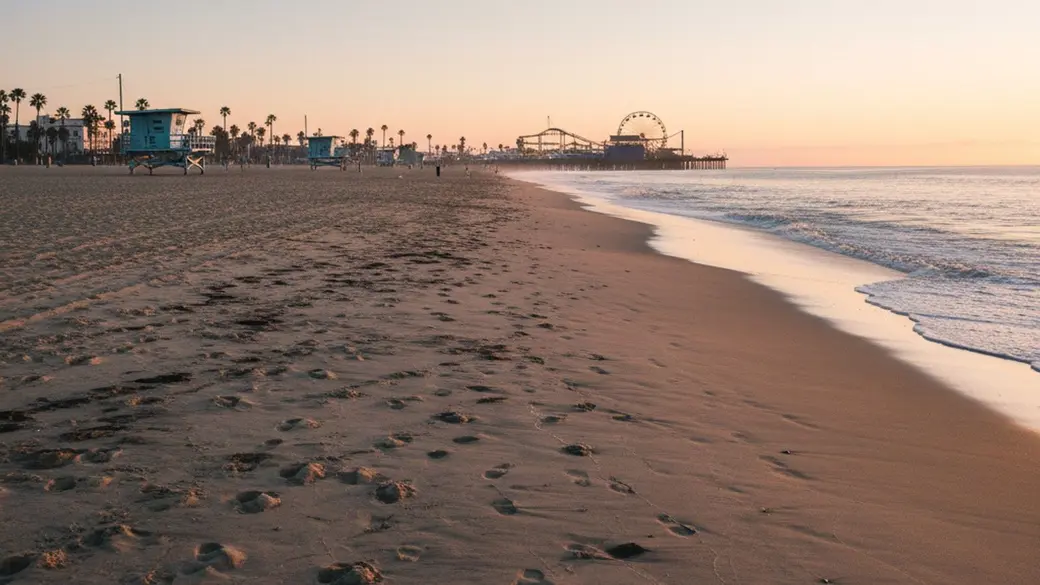
Residents can easily stroll down Ocean Avenue, grab a coffee, or spend the afternoon near the iconic Santa Monica Pier. It is a dense, breezy environment focused heavily on outdoor coastal activities like beach volleyball and cycling along the strand.
Los Angeles, on the other hand, is a sprawling metropolis that offers incredible neighborhood diversity and endless entertainment. Living here means you can spend your morning hiking near the Griffith Observatory, grab lunch in a bustling pocket of Beverly Hills, and enjoy the vibrant nightlife of Downtown Los Angeles all in one day.
The trade-off for this endless variety is that you will need to navigate a much larger geographic footprint to enjoy it. Los Angeles is a city of distinct cultural pockets, whereas Santa Monica offers a more consolidated, resort-like daily routine.
Commuting, Traffic, and Public Transportation
That larger footprint brings us right into commuting, traffic, and public transportation. Los Angeles is famously reliant on cars, and navigating the sprawling city usually means spending significant time behind the wheel.
If you are commuting across town for work, spending time on major freeways like the I-10 or the I-405 will be a major factor in your daily routine. Heavy traffic is simply a reality of living in the broader Los Angeles basin.
Santa Monica residents often enjoy a more localized routine, taking advantage of the city's grid layout and high walkability. For longer trips within the coastal area, residents frequently use local transit options like the Big Blue Bus.
If you do need to travel between the two cities, the Metro E Line provides a direct rail connection from downtown Santa Monica straight into the heart of Downtown Los Angeles. This light rail route has become a popular way to bypass freeway gridlock for cross-city commuters.
Pros and Cons of Living in Santa Monica vs. Los Angeles
To help you weigh your options, it helps to look at the big picture of what each area offers. Both cities have distinct advantages and drawbacks depending on your budget and lifestyle preferences.
Pros and Cons of Living in Santa Monica:
-
Immediate ocean access and a highly walkable, consolidated city layout.
-
Cooler coastal weather and localized municipal services.
-
An extremely high cost of living with premium real estate prices.
-
Elevated property crime rates in tourist zones and heavy weekend visitor traffic.
Pros and Cons of Living in Los Angeles:
-
A much more diverse housing inventory with a lower median home price.
-
Endless cultural, dining, and entertainment options across dozens of unique neighborhoods.
-
Heavy traffic and a strong reliance on cars due to urban sprawl.
-
Inconsistent neighborhood amenities and longer commute times.
Frequently Asked Questions
Is Santa Monica different from Los Angeles?
Yes, Santa Monica is an independent, incorporated city located within Los Angeles County. It has its own local government, school district, and police department, completely separate from the city of Los Angeles.
Is it cheaper to live in Los Angeles or Santa Monica?
It is significantly cheaper to live in Los Angeles. The overall cost of living in Santa Monica is roughly 54% higher, driven by median home prices that hover around $1,800,000 to $1,940,000 compared to Los Angeles's $900,000 to $942,000 range.
How far is Santa Monica from Downtown Los Angeles?
Santa Monica is located about 15 miles west of Downtown Los Angeles. Depending on traffic along the I-10 freeway, the drive can take anywhere from 20 minutes to over an hour, though the Metro E Line offers a consistent public transit alternative between the two.
Categories
Recent Posts