Navigating the Job Market Los Angeles CA: A 2026 Real Estate Perspective
Understanding the employment landscape is one of the most critical steps when planning a move to Southern California. Buyers and investors alike need clear visibility into local economic drivers to make informed housing decisions. The relationship between where you work and where you live dictates everything from your daily commute to long-term property appreciation.
As we move through the spring of 2026, the local economy shows distinct patterns of resilience and evolution. Shifts in major industries have created new employment hubs across the county, reshaping demand for housing in adjacent neighborhoods. Evaluating these trends provides a clear advantage when navigating one of the most competitive real estate environments in the country.
An Overview of the Job Market in Los Angeles CA
The broad economic indicators for Los Angeles County reflect a stable but transforming labor force. As of early 2026, the local unemployment rate hovers at approximately 5.5 percent. This figure represents a stabilized environment following the inflation pressures and post-pandemic employment shifts seen in previous years.
While the area does experience occasional corporate layoffs, core municipal and private sectors maintain steady hiring volumes. This consistent baseline of employment anchors the regional economy and supports sustained housing demand. A robust workforce directly translates to a highly competitive local real estate landscape, keeping property values insulated against national economic fluctuations.
Buyers relocating for work must account for this steady competition when entering the housing market. High employment participation means multiple offers remain common on well-priced properties near major commercial centers. Securing a home requires understanding exactly where these active labor pools are concentrated.
Top Employers and Major Industries Driving the Economy
The diversity of the Los Angeles economy extends far beyond the traditional entertainment sector. While film and television remain culturally significant, the region is heavily anchored by finance, defense, and specialized manufacturing. This multi-industry foundation prevents the local economy from stalling when a single sector experiences a downturn.
Recent labor market information from the Employment Development Department highlights strong nonfarm employment figures across the county. This data underscores the reality that Southern California remains a premier destination for corporate expansion and industrial growth. Understanding these distinct economic pillars is essential for buyers looking to invest near long-term employment hubs.
Entertainment, Aerospace, and Technology Sectors
Three dominant industrial sectors provide a significant portion of the high-paying careers in Los Angeles. These industries dictate regional wealth generation and heavily influence housing prices in their respective geographic pockets.
-
Hollywood and the entertainment industry continue to generate demand for media, production, and streaming technology roles.
-
The aerospace and defense sectors maintain a massive footprint, with continued expansion of engineering hubs throughout the South Bay region.
-
The technology sector, particularly in Silicon Beach, drives concentrated growth and significant job opportunities on the Westside.
Leading Corporate and Government Employers
Specific corporate giants and municipal organizations employ the largest segments of the regional workforce. Major private employers like Boeing, BAE Systems, Block, and PwC provide thousands of stable, high-wage careers. These companies act as localized economic engines, supporting retail and housing markets in their immediate vicinity.
Municipal employment also plays a massive role in regional stability. Organizations including the County of Los Angeles, the City of Los Angeles, and local university systems provide foundational jobs that are highly resistant to economic recessions. Furthermore, temporary work and employment agencies frequently fill critical gaps in corporate hiring, particularly for project-based tech initiatives.
Average Salary and Economic Outlook in Los Angeles CA
Analyzing typical wages provides necessary context for understanding local living expenses and housing affordability. According to recent 2026 Bureau of Labor Statistics data, the median average salary in Los Angeles is roughly $70,000 to $72,000. This baseline compensation reflects the broad spectrum of service, administrative, and entry-level corporate roles across the county.
However, high-demand roles in healthcare, aerospace, and technology frequently push average annual wages well over $100,000. Specialized technical and medical fields routinely see compensation packages exceeding $105,000 to keep pace with the competitive hiring landscape. These higher wage brackets are the primary drivers of demand for single-family homes in prime neighborhoods.
This wage data must always be weighed against the overall cost of living and historical inflation pressures in Southern California. Strong compensation packages are absolutely necessary to maintain a steady workforce in Los Angeles County. Without aggressive salary adjustments, employers would struggle to retain the talent required to fuel the regional economy.
Commute Times to Major Los Angeles Business Districts
Transportation and traffic patterns drastically impact the daily lives of local employees and dictate housing preferences. The I-10 and I-405 freeways heavily influence daily commutes for workers traveling to major centers like Century City and Silicon Beach. Navigating these corridors during peak hours requires strategic planning and significantly limits how far buyers are willing to live from their offices.
Average transit times to Downtown LA fluctuate wildly depending on the time of day and the specific route chosen. Traffic congestion remains a primary factor in real estate valuation, as buyers will pay a premium to reclaim hours lost on the road. Commute thresholds directly dictate where professionals choose to purchase homes, often prioritizing location over square footage.
Fortunately, alternative commuting options continue to improve across the city. The expanding Metro rail lines and rapid bus routes offer viable alternatives to freeway driving for many residents. Proximity to these transit stations has become a highly sought-after property feature, adding tangible value to nearby real estate.
Connecting Employment Hubs to Local Real Estate
Regional job market data correlates directly with housing prices and property types in adjacent neighborhoods. As of the spring 2026 market, the overall Los Angeles County median home price sits at approximately $910,000. This baseline figure provides a starting point, but prices fracture dramatically based on proximity to major employment centers.
Properties near Silicon Beach command median prices around $1,590,000 due to the concentration of high-earning tech demographics. Buyers in this area prioritize coastal access and minimal commute times to major tech campuses. In contrast, Downtown LA real estate features median prices near $615,000 for high-rise condos favored by urban professionals seeking immediate proximity to the financial district.
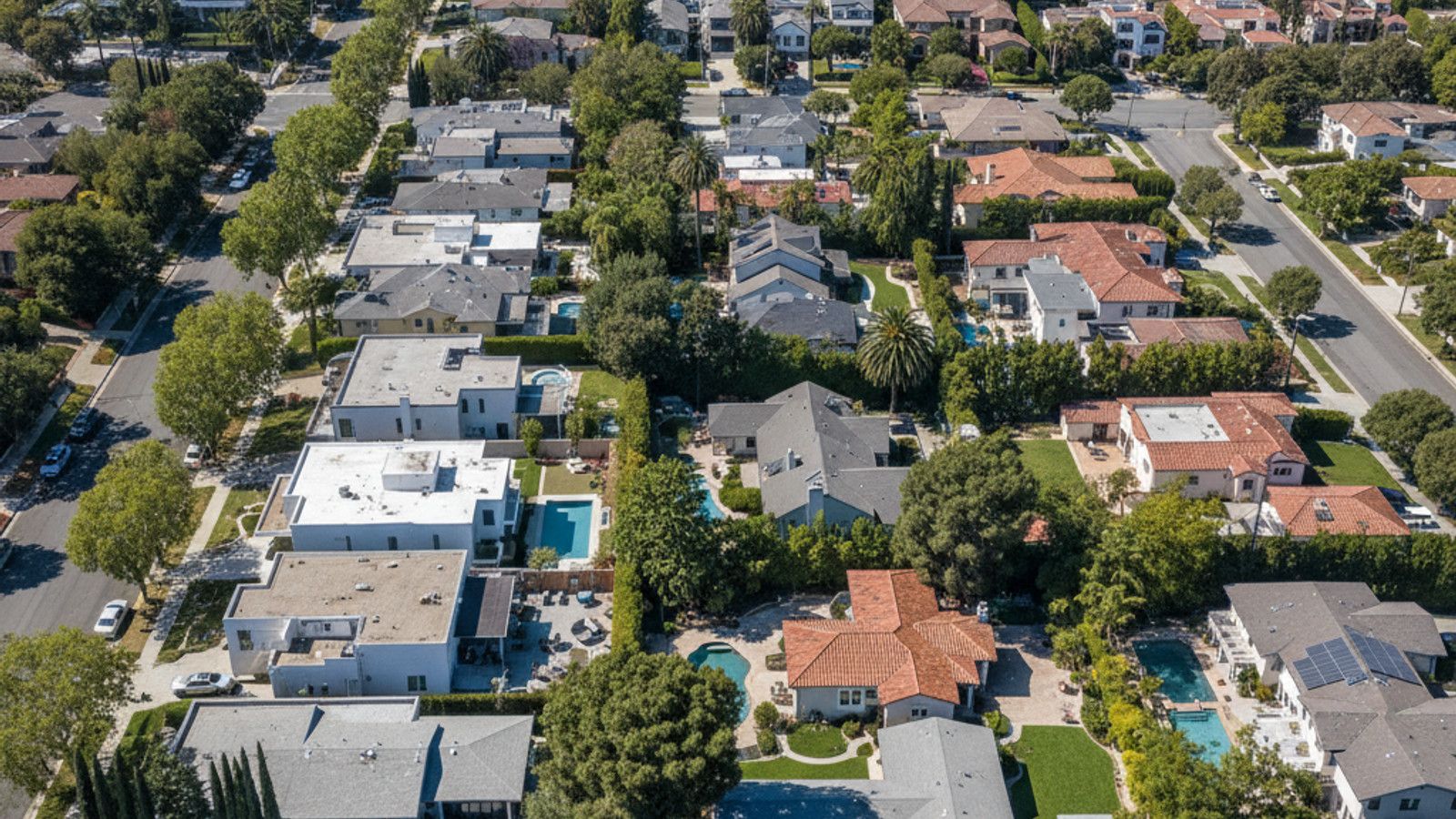
The availability of distinct property types supports different tiers of the workforce across the region. Single-family homes in the San Fernando Valley offer more space for remote workers, while townhomes near Metro stations provide efficient living for daily commuters. Understanding this dynamic is crucial for buyers trying to maximize their budget while maintaining a reasonable commute.
Frequently Asked Questions
How is the job market in Los Angeles CA currently?
The job market in Los Angeles CA currently demonstrates steady hiring across core sectors despite occasional corporate restructuring. The county maintains an approximate 5.5 percent unemployment rate as of early 2026. This stability continues to support strong demand in the local housing market.
Is California losing or gaining jobs in 2026?
California continues to experience targeted job growth in specialized industries like aerospace, healthcare, and green technology. While some tech companies have relocated headquarters, the state retains a massive, highly skilled labor force. Los Angeles County alone supports millions of steady jobs across diverse economic sectors.
What are the largest and top-growing industries in Los Angeles?
The largest industries driving the local economy include entertainment, aerospace engineering, and technology. Defense contracting in the South Bay and tech expansion in Silicon Beach are currently experiencing notable growth. These sectors frequently offer median salaries exceeding $105,000 annually.
Categories
Recent Posts